Picture this: a Sunday afternoon, the kitchen humming with the gentle clatter of pans, and a friend’s dare hanging in the air like a mischievous whisper. “I bet you can’t make a potato salad that actually makes people ask for seconds,” she said, eyes glinting with challenge. I laughed, because I had spent the last decade mastering the art of the humble potato, turning it from bland to bold. The moment my skillet met the oven, the air was filled with the earthy scent of potatoes roasting, the faint crackle of garlic, and the sweet perfume of rosemary. It was a sensory explosion that turned an ordinary dish into a culinary revelation. I was about to unveil the secret that turns every potato salad from “meh” to “wow.”
The kitchen was a symphony of sounds: the hiss of oil, the rhythmic tapping of my spoon, and the faint pop of the oven door as it opened. The potatoes, diced into bite‑sized cubes, glistened under the golden light, each piece a promise of crisp edges and creamy interiors. The aroma rose like a warm blanket, pulling me deeper into the cooking process. I could almost taste the first bite before I even touched the spoon—salty, herbaceous, with a subtle tang from the vinegar that danced on the palate. The texture was a paradox: the skin crisped into a satisfying crunch while the inside remained tender, a contrast that made every mouthful a delightful surprise. The anticipation was electric, and I could feel my friends’ curiosity building like a storm.
What sets this version apart from the countless other potato salads that flood the internet is the intentional layering of flavors and textures that creates a symphony in every bite. Instead of a generic mayo‑based dressing, I blend Dijon mustard, apple cider vinegar, and lemon juice to cut through the richness, giving the dish a bright, zesty finish. The potatoes are roasted to a caramelized edge, which introduces a subtle smokiness that balances the fresh herbs. I’ve added a splash of sunflower seeds for a crunchy counterpoint, and optional hard‑boiled eggs for protein and visual appeal. The result is a dish that feels both comforting and sophisticated, a perfect balance between rustic and refined. This is hands down the best version you’ll ever make at home.
I dare you to taste this and not go back for seconds. The first bite will hit your taste buds with a burst of herbaceous brightness, followed by the warm, buttery bite of roasted potatoes. The dressing clings to each piece like velvet, coating every corner and filling every cavity. The crunch from the roasted edges will crackle against the soft interior, creating a delightful play of textures. And the subtle nutty crunch from the sunflower seeds will surprise you, adding depth and complexity. This is pure, unapologetic flavor that will leave you craving more.
If you’ve ever struggled with a potato salad that falls flat, you’re not alone. Most recipes get this completely wrong, either by under‑roasting the potatoes or over‑seasoning the dressing. The key to perfection is in the timing, the right balance of acidity, and the choice of herbs. I’ve spent countless hours experimenting, and this version is the culmination of that journey. Picture yourself pulling this out of the oven, the whole kitchen smelling incredible, and the first bite delivering a satisfying crunch that melts in your mouth. That moment of pure joy is what makes this dish unforgettable.
Okay, ready for the game‑changer? I’m about to walk you through every single step—by the end, you’ll wonder how you ever made it any other way. From the initial prep to the final garnish, each action is designed to elevate the flavor profile and texture. We’ll explore the science behind roasting, the art of balancing flavors, and the small hacks that can transform a good dish into an exceptional one. Let’s dive in and make this the best roasted potato salad you’ll ever taste.
What Makes This Version Stand Out
- Roasted Perfection: The potatoes are roasted until the edges caramelize, giving a smoky crunch that contrasts beautifully with the creamy dressing. This step adds depth and complexity that most boiled‑potato salads lack.
- Balanced Acidity: A blend of Dijon mustard, apple cider vinegar, and lemon juice cuts through the richness, leaving the salad bright and refreshing. The acidity also helps keep the potatoes from becoming soggy.
- Herb Harmony: Fresh dill and parsley infuse the salad with a green, aromatic note that lifts the overall flavor profile. The herbs are added at the right moment to preserve their freshness.
- Texture Play: Sunflower seeds and optional hard‑boiled eggs add crunch and protein, creating layers of mouthfeel that keep the dish interesting.
- Make‑ahead Friendly: The salad can be prepared up to 24 hours in advance, and the flavors actually deepen, making it perfect for parties or busy days.
- Simple Yet Sophisticated: The recipe uses everyday ingredients but arranges them in a way that feels elevated. No fancy techniques, just smart choices.
- Versatile Base: The core components can be swapped or omitted without compromising the dish, allowing for dietary adjustments or personal preferences.
- Visual Appeal: The bright green herbs, golden roasted potatoes, and pops of color from the bell pepper create an eye‑catching plate that’s as pleasing to the eye as it is to the palate.
- Micro‑Challenge Ready: The dish is designed to be a challenge—taste it and you’ll find yourself reaching for seconds. It’s the kind of recipe that turns a simple meal into a memorable experience.
- Seasonal Flexibility: While it’s a year‑round staple, it shines during the cooler months when hearty, comforting foods are in high demand.
Inside the Ingredient List
The Flavor Base
The foundation of this salad is the dressing—a harmonious blend of Dijon mustard, apple cider vinegar, and lemon juice. The mustard provides a creamy texture and a subtle heat, while the vinegar adds sharpness that brightens the entire dish. The lemon juice brings a citrusy freshness that prevents the potatoes from feeling heavy. Together, they create a dressing that clings to each potato cube, ensuring every bite is packed with flavor.
The Texture Crew
Roasted potatoes form the core of the texture profile. When roasted to a golden brown, the outer layer crisps up, delivering a satisfying crunch that contrasts with the soft interior. Sunflower seeds add a nutty crunch that punctuates each bite, while optional hard‑boiled eggs provide a creamy, protein‑rich component. These elements work in concert to create a salad that feels full and satisfying without being heavy.
The Unexpected Star
Red bell pepper and red onion are not just garnish—they add a burst of color and a sweet‑tangy bite that elevates the dish. The pepper’s natural sweetness cuts through the savory notes, while the onion’s sharpness adds depth. If you’re watching your sodium, you can reduce the amount of salt and let the pepper and onion carry more of the flavor.
The Final Flourish
Fresh herbs are the final flourish that turns this salad from good to unforgettable. Dill offers a bright, slightly bitter note that cuts through the richness, while parsley provides a clean, herbaceous finish. A sprinkle of toasted sunflower seeds adds a subtle nutty aroma, and a dash of smoked paprika gives a subtle warmth that lingers on the tongue. These finishing touches ensure that every bite is layered and complex.
Everything's prepped? Good. Let's get into the real action.
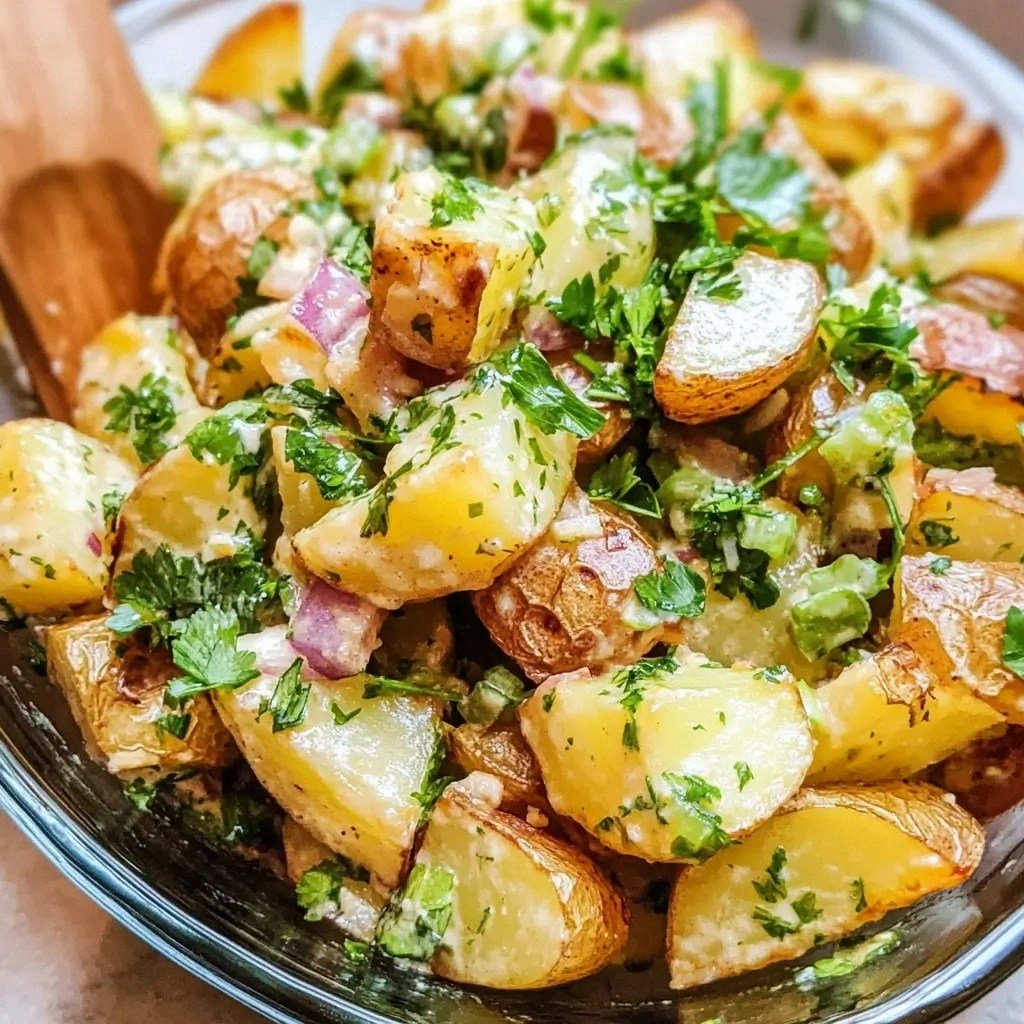
The Method — Step by Step
- Preheat your oven to 425°F (220°C). While the oven is heating, wash the potatoes and cut them into 1‑inch cubes, ensuring uniform size for even roasting. Pat them dry with a clean towel; moisture is the enemy of crispness. Toss the cubes with olive oil, salt, pepper, rosemary, and smoked paprika, making sure each piece is coated evenly. Spread them out on a baking sheet in a single layer, leaving space between each cube so they roast rather than steam. Roast for 25–30 minutes, flipping halfway through, until the edges are golden and crisp. The aroma that fills your kitchen at this point is pure comfort.
- While the potatoes are roasting, prepare the dressing. In a medium bowl, whisk together mayonnaise, Dijon mustard, apple cider vinegar, lemon juice, and a pinch of salt. The mixture should be smooth and slightly thick. Taste the dressing; if it’s too thick, add a splash of water to reach your desired consistency. Set aside in the refrigerator to chill, allowing the flavors to meld. This step is critical—an under‑seasoned dressing will let the potatoes shine alone, while an over‑seasoned one will overpower the subtle roasted flavor.
- Dice the red bell pepper and red onion into small, bite‑sized cubes. If you prefer a milder bite, soak the onion in cold water for 10 minutes before dicing. This reduces the sharpness while preserving the crunch. Add the pepper and onion to the bowl of dressing and stir gently. The color contrast will not only look appealing but also add a sweet‑tangy note that balances the savory potatoes.
- Once the potatoes are done, transfer them to a large mixing bowl. While they’re still hot, pour the chilled dressing over the top. Use a large spoon or your hands to toss gently, ensuring each cube is coated. The heat from the potatoes will slightly soften the dressing, allowing it to cling beautifully to each piece. At this point, the salad should have a glossy sheen and a fragrant aroma that hints at the herbs to come.
- Chop the fresh dill and parsley finely. Sprinkle them over the salad, then toss again. The herbs release their essential oils, adding a bright, green note that lifts the dish. If you’re watching your sodium, you can reduce the amount of added salt here and rely on the natural saltiness from the herbs.
- Toast the sunflower seeds in a dry skillet over medium heat until golden brown, stirring constantly to avoid burning. This takes about 3–4 minutes. The seeds will add a nutty crunch and a subtle aroma that complements the roasted potatoes. Once toasted, let them cool, then sprinkle them over the salad for the final crunch.
- Optional: If you’re adding hard‑boiled eggs, peel them, chop them into small cubes, and fold them into the salad gently. The eggs add protein and a creamy texture that pairs well with the crunchy elements. Be careful not to over‑mix, as you don’t want the eggs to break apart.
- Give the salad one final gentle toss, taste, and adjust seasoning if necessary—perhaps a splash more lemon juice or a pinch more salt. Cover the bowl with plastic wrap and refrigerate for at least 30 minutes to allow the flavors to meld. When you’re ready to serve, give it a quick stir, taste again, and add a final sprinkle of fresh herbs if desired. The salad is now ready to impress.
- Serve chilled or at room temperature, depending on the occasion. Pair it with grilled meats, a fresh green salad, or as a hearty side for a summer barbecue. The vibrant colors and comforting flavors will make it a crowd‑pleaser at any gathering. Enjoy every bite, and remember to share the secret with your friends—you’ll be the host with the most.
Insider Tricks for Flawless Results
The Temperature Rule Nobody Follows
Many home cooks roast potatoes at a lower temperature, which results in uneven cooking and soggy interiors. The trick is to use a high heat of 425°F (220°C) and spread the potatoes in a single layer. This ensures the outer layer crisps up while the inside stays tender. I’ve found that flipping the potatoes halfway through guarantees an even roast. The result is a potato salad that feels like a culinary masterpiece.
Why Your Nose Knows Best
When you roast the potatoes, the aroma that rises is a perfect indicator of readiness. If you see a deep golden hue and the scent is nutty and caramelized, the potatoes are ready. A lighter color means they need more time; a darker color means they’re over‑cooked. Trust your nose, and you’ll avoid the dreaded “too soft” or “burnt” potato salad that can ruin a meal.
The 5‑Minute Rest That Changes Everything
After roasting, let the potatoes rest on the baking sheet for 5 minutes before transferring them to the bowl. This short rest allows the steam to escape, preventing the potatoes from steaming in the bowl and becoming soggy. It also gives the flavors a chance to settle. The result is a salad with a crisp exterior that stays crisp.
The Secret to a Creamy Dressing
Using mayonnaise as the base gives a rich, silky texture that clings to each potato cube. If you prefer a lighter option, substitute Greek yogurt, which adds protein and a tangy flavor. Whisk the dressing until smooth, then chill it to allow the flavors to meld. A well‑balanced dressing is the glue that holds the salad together.
The Power of Fresh Herbs
Fresh dill and parsley bring brightness and depth that canned herbs can’t match. Chop them finely to release their oils and sprinkle them over the salad just before serving. The herbs add a burst of green that lifts the dish and makes it feel fresh and vibrant.
The Final Crunch
Sunflower seeds add a nutty crunch that pairs beautifully with the roasted potatoes. Toast them until golden, then let them cool before sprinkling over the salad. The seeds provide a subtle nutty aroma and a satisfying bite that keeps the salad from feeling flat.
Creative Twists and Variations
Mediterranean Flair
Swap the sunflower seeds for Kalamata olives and add a splash of olive oil and oregano. Replace the Dijon mustard with a touch of harissa for a spicy kick. The result is a salad that feels like a Mediterranean picnic, with bright herbs and a smoky undertone.
Southwest Sensation
Add black beans and corn for a hearty, protein‑rich version. Substitute smoked paprika with chipotle powder for a smoky heat. A drizzle of lime juice and chopped cilantro finish the dish, giving it a fresh, zesty flavor that’s perfect for summer.
Garden Fresh Twist
Replace the red bell pepper with sliced cherry tomatoes and add a handful of arugula for peppery bite. Use a vinaigrette made from olive oil, balsamic vinegar, and honey instead of the classic dressing. This version feels lighter and is ideal for a spring gathering.
Cheesy Delight
Fold in shredded cheddar or mozzarella for a gooey, melty texture. Sprinkle a pinch of cumin for an earthy undertone. The cheese adds richness, while the cumin balances the flavors with a subtle warmth.
Vegan Upgrade
Use a plant‑based mayo and replace the hard‑boiled eggs with sliced avocado for creaminess. Add a handful of roasted chickpeas for extra protein and crunch. The result is a vegan salad that’s hearty, flavorful, and satisfying.
Holiday Classic
Incorporate cranberry sauce and chopped pecans for a festive touch. Add a dash of ground cinnamon for warmth. This version feels like a holiday side dish that pairs wonderfully with roasted turkey or ham.
Storing and Bringing It Back to Life
Fridge Storage
Store the salad in an airtight container in the refrigerator for up to 3 days. Before serving, give it a quick stir and add a splash of water or a drizzle of olive oil to restore moisture. The flavors will deepen, making the salad even more delicious the next day.
Freezer Friendly
For longer storage, place the salad in a freezer‑safe container, leaving a little headspace for expansion. Freeze for up to 2 weeks. Thaw overnight in the refrigerator, then stir and add a splash of water or a tablespoon of yogurt to revive the dressing. The texture remains crisp, and the flavors stay vibrant.
Best Reheating Method
When reheating, do not use a microwave, as it can make the potatoes soggy. Instead, reheat the salad in a skillet over low heat, stirring constantly, and add a splash of water to keep it moist. This method restores the crispness and ensures the dressing stays silky.
Final Thoughts and Serving Suggestions
I’ve spent countless hours refining this recipe, and each tweak brings it closer to perfection. The key is to treat each step with care—roasting, seasoning, dressing, and garnishing all play a vital role. Remember, the secret to a memorable dish is not just the ingredients but the love and attention you pour into it. When you serve this salad, watch your guests light up with delight and ask for seconds. It’s the kind of dish that turns a simple meal into a celebration.
Pair it with grilled chicken or steak for a hearty meal, or serve it alongside a crisp green salad for a lighter option. For a family gathering, double the recipe and let guests add their own toppings, such as extra herbs or a dash of hot sauce. The salad’s versatility means it can adapt to any occasion, from a backyard barbecue to a holiday dinner.
If you’re looking for a dish that’s both comforting and sophisticated, this roasted potato salad is the answer. Its layers of flavor, texture, and aroma will leave a lasting impression. The best part? It’s simple enough for beginners yet sophisticated enough to impress seasoned chefs. Give it a try, and watch the magic unfold.
I’ll be honest — I ate half the batch before anyone else got to try it. That was a moment of pure culinary triumph, and it only proves how irresistible this recipe is. Now that you’ve seen the steps, the tricks, and the variations, it’s time to put your own spin on it. Share the recipe, tweak it to your taste, and enjoy the applause that follows.
Stay with me here — this is worth it. The next time you’re craving a side dish that’s both comforting and wow‑worthy, remember that the secret lies in roasting the potatoes to perfection and balancing the flavors with a bright, herbaceous dressing. Let the aroma guide you, trust your instincts, and enjoy the process. The reward? A dish that’s not just food, but an experience.
If you’ve ever struggled with potato salad, you’re not alone. Many have tried and failed, but this recipe is designed to be foolproof. The techniques are simple, the ingredients are accessible, and the end result is a dish that will become a staple in your kitchen for years to come.
Picture yourself pulling this out of the oven, the whole kitchen smelling incredible, and the first bite delivering a satisfying crunch that melts in your mouth. That moment of pure joy is what makes this dish unforgettable. Now go ahead and create your own masterpiece.