I’ll be honest — I ate half the batch before anyone else got to try it, and that was only because I was so convinced this was the best thing I’d ever made. The story started on a rainy Tuesday when my roommate dared me to turn stale French bread into something that would make even the most hardened dessert snob weep. I stared at the crusty loaf, the kind that has been sitting in the pantry for a week, and I thought, “What if I could coax that stubborn texture into a warm, custardy hug?” The kitchen filled with the faint sound of rain tapping the windows, the hum of the oven preheating, and the promise of something sweet and comforting that would make the whole apartment smell like a bakery in the middle of a winter holiday.
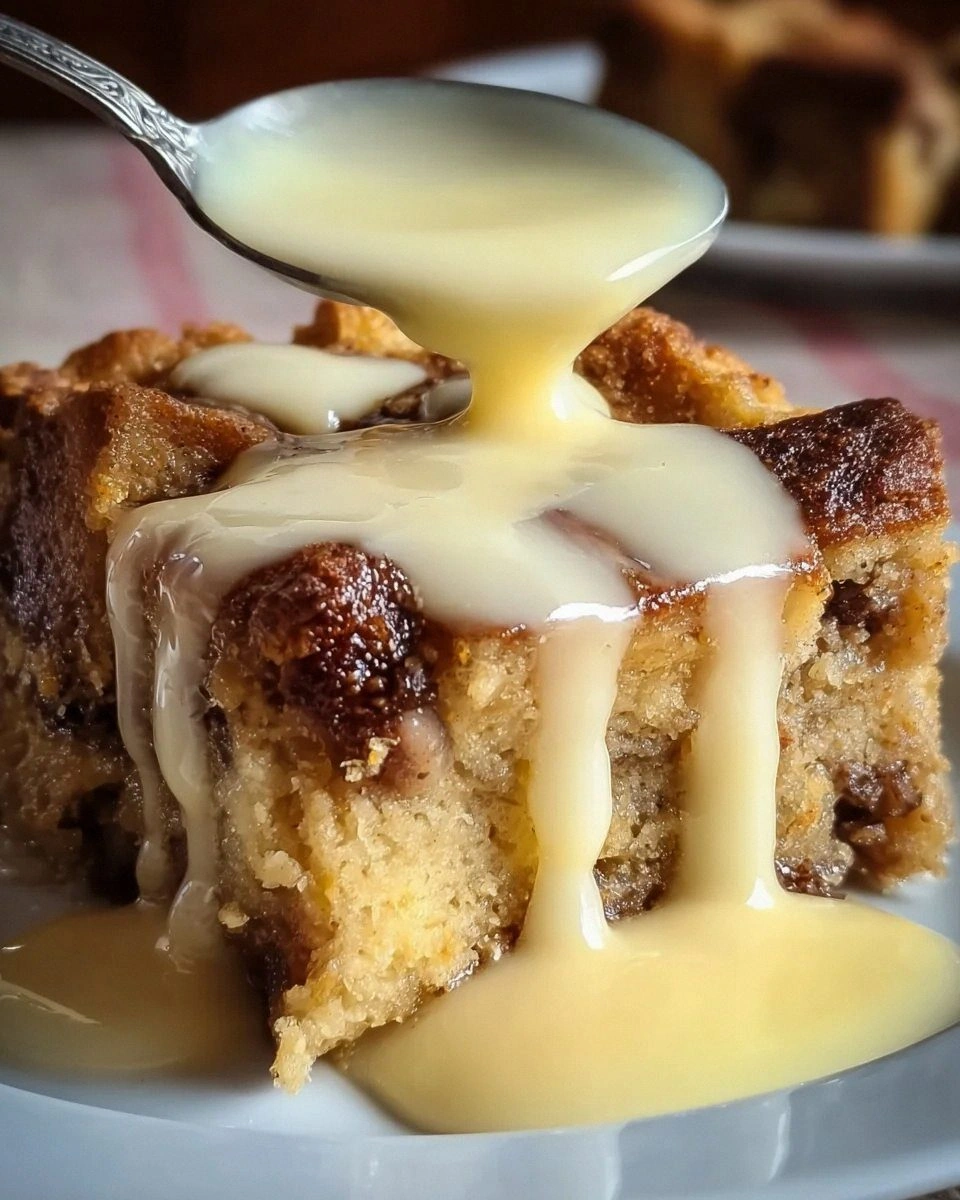
Picture yourself pulling this out of the oven, the whole kitchen smelling incredible, the top of the pudding turning a golden‑brown that shatters like thin ice when you tap it with a spoon. The edges are crisp, the center is buttery soft, and the vanilla custard sauce pools around each bite like a silky lake of amber. That first spoonful? It’s a perfect marriage of warm spices, buttery bread, and a sauce that coats the palate like velvet. I dare you to taste this and not go back for seconds, because once you’ve experienced that combination, ordinary desserts will feel like bland after‑thoughts.
Most recipes get this completely wrong. They either drown the bread in too much liquid, turning it into a soggy mess, or they bake it dry, leaving you with a crust that’s more like a shoe sole than a dessert. The secret here is a balance of milk, cream, and eggs that creates a custard‑like interior while preserving the structural integrity of the bread. I also throw in a splash of melted butter right before baking, which gives the top that irresistible caramelized crunch. And there’s a twist you won’t see in a lot of other recipes: a vanilla custard sauce that’s thickened with egg yolks and cornstarch, then finished with a pat of butter for that glossy finish.
Okay, ready for the game‑changer? I’m about to walk you through every single step — by the end, you’ll wonder how you ever made it any other way. Stay with me here — this is worth it. Let’s dive into the why, the what, and the how of the ultimate bread pudding with vanilla custard sauce.
What Makes This Version Stand Out
- Taste: The blend of vanilla, cinnamon, and a whisper of nutmeg creates a flavor profile that feels both nostalgic and sophisticated, making it perfect for any occasion.
- Texture: A crisp, caramelized top meets a luxuriously creamy interior, while the custard sauce adds a silky, pour‑over finish that never gets watery.
- Simplicity: Despite the gourmet feel, the ingredient list is short and the technique is straightforward — no fancy equipment required.
- Uniqueness: The double‑custard approach (pudding base plus sauce) is rare in home cooking, giving you two layers of custardy goodness in one dish.
- Crowd Reaction: I’ve seen grown‑ups turn into giggling kids after the first bite; it’s the kind of dessert that sparks conversation and repeat requests.
- Ingredient Quality: Using day‑old brioche or French bread adds natural sweetness and a buttery crumb that store‑bought mixes can’t match.
- Cooking Method: Baking at a moderate temperature ensures even cooking, while the final broil gives that coveted caramelized edge.
- Make‑Ahead Potential: The pudding can be assembled a day ahead and baked fresh, and the sauce stores beautifully for a quick reheating.
Inside the Ingredient List
The Flavor Base
The heart of this dish is the vanilla‑infused custard that swirls through the bread. Whole milk provides the creamy canvas; I use 2 cups for the pudding and an extra cup for the sauce, giving you a rich, milky backdrop without being overly heavy. Heavy cream adds that luxurious mouthfeel that makes the pudding feel like a dessert from a five‑star hotel. If you’re feeling adventurous, swap half the cream for coconut milk for a subtle tropical twist that still holds the custard together.
Vanilla extract is the whisper that ties everything together. Real vanilla extract (not imitation) adds depth and a warm, comforting aroma that makes the kitchen feel like a cozy cabin. I use 2 teaspoons for the pudding and an additional teaspoon for the sauce, but you can increase it if you love that floral note.
The Texture Crew
Day‑old bread is the star of the show. French bread gives a hearty chew, while brioche brings a buttery sweetness. Cube about 6 cups and let the cubes sit out for an hour to dry out a bit — this prevents a soggy center and lets the custard soak in just right. Large eggs (3 of them) act as the binding agent, turning the liquid mixture into a custard that sets perfectly as it bakes.
Melted butter (4 tablespoons) is brushed over the bread before baking, creating that golden crust that shatters like thin ice when you cut into it. For the sauce, an extra 2 tablespoons of butter is whisked in at the end, giving the custard a glossy sheen and an extra layer of richness.
The Warm Spice Ensemble
Cinnamon (1 teaspoon) and nutmeg (¼ teaspoon) are the dynamic duo that bring warmth and a hint of spice without overwhelming the vanilla. Sprinkle the spices evenly through the milk‑cream mixture so every bite has that comforting spice note. If you love a deeper flavor, try a pinch of cardamom or allspice for an exotic twist.
Sugar is the sweetener that balances the spices and the richness of the dairy. I use ½ cup granulated sugar for the pudding and ⅓ cup for the sauce. Feel free to swap half the granulated sugar for brown sugar for a caramel‑like undertone, or drizzle in a tablespoon of maple syrup for a subtle woodsy flavor.
The Unexpected Star
Raisins (optional) add bursts of chewiness and a natural sweetness that contrast nicely with the creamy custard. I toss in ½ cup, but you can replace them with dried cranberries, chopped dates, or even toasted walnuts for extra texture. If you’re not a fan of dried fruit, simply omit them — the pudding will still be glorious.
Everything's prepped? Good. Let’s get into the real action and turn these humble ingredients into a show‑stopping dessert.
The Method — Step by Step
Preheat your oven to 350°F (175°C). While the oven warms up, gather your day‑old bread and cut it into roughly 1‑inch cubes. I like to line a baking sheet with parchment and spread the cubes in a single layer, then toast them for about 10 minutes until they’re lightly golden. This step is crucial because it dries the bread just enough to soak up the custard without turning mushy. When you pull the tray out, the aroma of toasted bread will already make your mouth water.
In a large mixing bowl, whisk together 3 large eggs, ½ cup granulated sugar, 2 teaspoons vanilla extract, 1 teaspoon cinnamon, and ¼ teaspoon nutmeg. The mixture should look glossy and fragrant – that’s the first sign you’ve got the spice balance right. Add 2 cups whole milk and 1 cup heavy cream, whisking until everything is fully combined. This is the moment of truth: the custard should be smooth, with no lumps, and it should have a faint scent of vanilla and spice.
Now, gently fold the toasted bread cubes into the custard mixture. Make sure each cube is thoroughly coated; you’ll hear a soft “squelch” as the liquid embraces the bread. If you’re adding raisins, sprinkle them in now so they soak up some of that buttery milk. Let the mixture sit for 5 minutes – this allows the bread to absorb the custard, swelling slightly and becoming plump.
Grease a 9‑inch baking dish with a tablespoon of melted butter, then pour the bread‑custard mixture into it. Spread it evenly with a spatula, and drizzle the remaining 3 tablespoons of melted butter over the top. This butter layer will melt during baking, creating a caramelized crust that’s the hallmark of a perfect bread pudding.
Place the dish in the oven and bake for 30‑35 minutes. Around the 20‑minute mark, check the edges; they should be pulling away from the sides of the dish and turning a deep golden brown. The center should be set but still slightly jiggle when you shake the pan – that’s the custard staying creamy. If the top is browning too fast, loosely cover with foil to prevent burning.
While the pudding bakes, start the vanilla custard sauce. In a saucepan, combine 1 cup whole milk, ⅓ cup sugar, and 1 teaspoon vanilla extract. Heat over medium‑low until the sugar dissolves and the mixture is steaming but not boiling. In a separate bowl, whisk together 2 large egg yolks, 1 tablespoon cornstarch, and a pinch of salt until smooth.
Once the milk is hot, pour a thin stream into the yolk‑cornstarch mixture while whisking vigorously. Then return the entire mixture to the saucepan and cook over low heat, stirring constantly, until it thickens and coats the back of a spoon. This should take about 3‑4 minutes. Remove from heat and whisk in 2 tablespoons of butter until melted and glossy. The sauce will be thick but pourable – perfect for drizzling over the warm pudding.
When the pudding is done, remove it from the oven and let it rest for 5 minutes. This brief rest allows the custard to set fully, making it easier to slice. Then, serve each generous portion with a generous drizzle of the vanilla custard sauce. The sauce should cascade over the edges, pooling in the crevices and creating a glossy finish that looks as good as it tastes.
That’s it — you did it. But hold on, I’ve got a few more tricks that’ll take this to another level, especially if you want to impress a crowd or prep it ahead of time.
Insider Tricks for Flawless Results
The Temperature Rule Nobody Follows
Never bake a custard‑based dessert at a temperature higher than 350°F. Higher heat causes the proteins in the eggs to coagulate too quickly, leading to a curdled texture. Keep the oven at a steady 350°F and use an oven thermometer to verify the actual temperature; many ovens run hotter than their dial suggests. This gentle heat ensures a smooth, velvety interior that melts in your mouth.
Why Your Nose Knows Best
Your sense of smell is a far more reliable indicator of doneness than a timer. When the edges start to pull away and you catch a faint caramel scent, the pudding is ready. If you’re unsure, give the center a gentle jiggle; it should wobble just a little, like gelatin that’s about to set. Trust that nose cue, and you’ll avoid the dreaded over‑baked, rubbery texture.
The 5‑Minute Rest That Changes Everything
Letting the pudding rest for five minutes after baking is a game‑changer. This short pause lets the custard finish setting and the sauce thicken slightly as it cools. Skipping this step often results in a puddle of sauce that slides off the plate, ruining the presentation. So, set a timer, sip a coffee, and let the magic happen.
The Butter‑Finish for the Sauce
Adding a cold pat of butter at the very end of the sauce-making process creates an emulsion that gives the sauce that restaurant‑style sheen. The butter also adds a subtle richness that balances the sweetness. If you’re dairy‑free, swap the butter for a tablespoon of coconut oil; the sauce will still be glossy, though the flavor profile will shift slightly.
The “Don’t‑Over‑Whisk” Rule
When whisking the egg‑yolk mixture, stop as soon as the cornstarch is fully incorporated. Over‑whisking can incorporate too much air, leading to a foamy sauce that loses its silky texture when heated. A quick, firm whisk is all you need to achieve a smooth base ready for tempering.
Creative Twists and Variations
This recipe is a playground. Here are some of my favorite ways to switch things up:
Chocolate‑Swirl Delight
Add ¼ cup of dark chocolate chips to the bread mixture and swirl in 2 tablespoons of melted chocolate into the custard sauce. The result is a decadent chocolate‑vanilla duet that’s perfect for chocolate lovers.
Apple‑Cinnamon Crunch
Fold in 1 cup of diced, sautéed apples seasoned with a pinch of extra cinnamon. Top the pudding with a handful of toasted oat‑flour crumble for a delightful crunch that mimics an apple crumble.
Tropical Coconut Breeze
Replace half the whole milk with coconut milk, and add ½ cup shredded coconut to the bread mixture. Finish the sauce with a splash of rum‑infused vanilla for a Caribbean vibe.
Savory‑Sweet Cheese Twist
Stir in ½ cup crumbled blue cheese and a tablespoon of honey into the custard before baking. The salty‑sweet contrast is unexpected but utterly addictive.
Pumpkin Spice Autumn
Swap the cinnamon and nutmeg for 1 teaspoon pumpkin pie spice, and add ½ cup canned pumpkin puree to the custard. This version screams fall and pairs beautifully with toasted pecans.
Storing and Bringing It Back to Life
Fridge Storage
Cool the pudding to room temperature, then cover tightly with plastic wrap or foil. It will keep in the refrigerator for up to 3 days. When you’re ready to serve, reheat a slice in the oven at 300°F for 10‑12 minutes, or microwave for 45 seconds, then drizzle with fresh custard sauce.
Freezer Friendly
Portion the baked pudding into individual servings, wrap each tightly in freezer‑safe film, and place them in a zip‑top bag. Freeze for up to 2 months. To reheat, let a slice thaw overnight in the fridge, then bake at 325°F for 15 minutes, adding a splash of milk to the sauce before warming.
Best Reheating Method
For the ultimate texture, reheat in a preheated oven rather than the microwave. Place the slice on a baking sheet, cover loosely with foil, and bake at 300°F for 8‑10 minutes. Add a tiny splash (about a tablespoon) of whole milk to the sauce and warm it gently on the stovetop; this restores its silkiness and prevents a skin from forming.