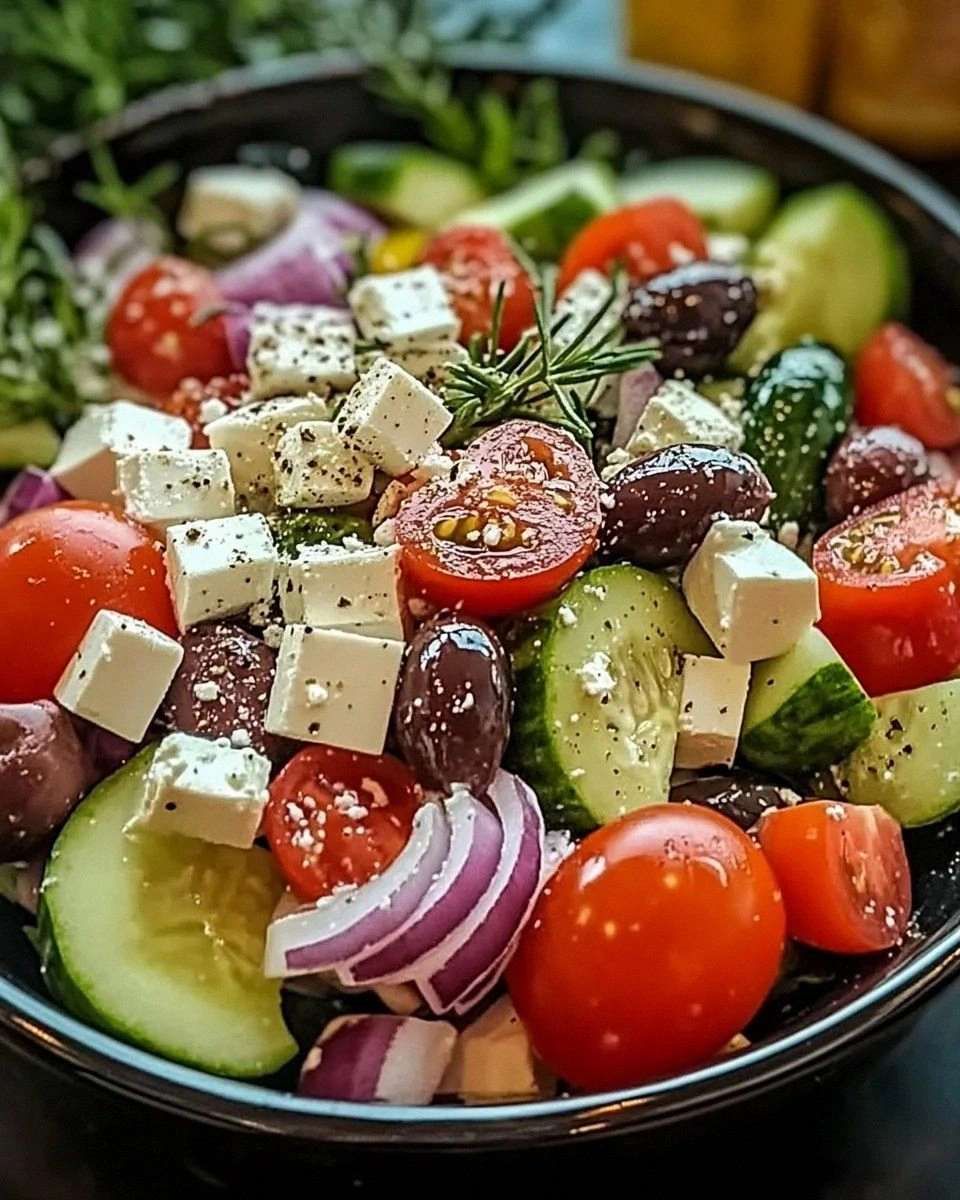
Picture this: It's a scorching July afternoon, I'm sweating over a cutting board, trying to impress my Greek friend Maria with what I thought was a respectable Mediterranean spread. She takes one look at my sad, watery salad and bursts out laughing. "This is what you call a Greek salad?" she says, snatching the bowl and dumping it into the sink without hesitation. "Let me teach you what real horiatiki tastes like." Fast forward twenty minutes, and I'm sitting on her sun-drenched patio, tasting something so vibrant I swear colors taste brighter. The tomatoes burst like summer sunshine between my teeth, the feta crumbles into clouds of salty perfection, and the olive oil coats everything in liquid gold. That moment changed everything.
Here's the thing: most Greek salads you've eaten are lies. They're swimming pools of diluted tomato water, drowning sad vegetables that taste like refrigerator. Traditional Greek salad isn't about fancy ingredients or Instagram presentation — it's about letting four or five perfect ingredients sing in harmony. The secret isn't in what you add, but in what you leave out. No lettuce, no fancy dressings, no shortcuts. Just pure, unadulterated Mediterranean magic that makes you close your eyes involuntarily with the first bite.
If you've ever struggled with watery salads, flavorless vegetables, or wondering why your homemade Greek attempts never taste like the ones in Greek restaurants, you're not alone — and I've got the fix. This recipe is the culmination of five years of pestering Maria for details, testing every tomato variety on the market, and perfecting techniques that most cookbooks completely ignore. The result? A salad so authentic that Maria's grandmother gave me a nod of approval, which in Greek terms is basically the culinary equivalent of winning the lottery.
Okay, ready for the game-changer? We're about to build layers of flavor using techniques that would make even the most stubborn Greek yiayia proud. By the end of this journey, you'll understand why simplicity reigns supreme, why salt timing matters more than you think, and how to create a salad that tastes like you're dining on the cliffs of Santorini at sunset. Let me walk you through every single step — by the end, you'll wonder how you ever made it any other way.
What Makes This Version Stand Out
Tomato Technique: Forget everything you've learned about cutting tomatoes. The way you slice them determines whether they release their sweet juices or turn into watery mush. I'm showing you a cutting method that creates perfect pockets for the olive oil to cling to, ensuring every bite explodes with concentrated tomato flavor.
Salt Strategy: Most recipes get this completely wrong. Salting your vegetables at the wrong time creates a wet mess that dilutes every flavor. Here's what actually works: strategic salting that draws out just enough moisture to intensify flavors without creating a swimming pool at the bottom of your bowl.
Olive Oil Quality: This isn't the place for that bargain bottle from the back of your pantry. I'm talking about the good stuff — fruity, peppery, green-gold liquid that costs more than your average wine. The olive oil isn't just a dressing here; it's a co-star that deserves top billing alongside your tomatoes.
Onion Transformation: Raw red onion can be harsh and overwhelming, but Greek salad needs that sharp bite. The solution? A quick 10-minute bath that mellows the harshness while keeping the crunch. Your taste buds will thank you, and your breath won't scare away your dinner companions.
Feta Philosophy: Stop buying pre-crumbled feta — it's a crime against humanity. I'll show you exactly what to look for in authentic Greek feta, how to store it properly, and the optimal crumble size that creates perfect pockets of salty creaminess in every bite.
Timing Magic: The difference between a good Greek salad and a transcendent one comes down to timing. Mix too early and everything gets soggy. Mix too late and the flavors never meld. I've perfected a timing sequence that ensures perfect texture and maximum flavor development.
Crowd Reaction: I dare you to taste this and not go back for seconds. I've served this to self-proclaimed salad haters who ended up eating the entire bowl standing at the counter. It's that good.
Inside the Ingredient List
The Foundation Crew
The tomatoes are the undisputed stars of this show, and using the wrong variety is like casting a sitcom actor in a Shakespeare play. You want ripe, juicy tomatoes that still hold their shape when cut. Heirloom varieties work beautifully, but in a pinch, good vine-ripened tomatoes will absolutely work. The key is finding tomatoes that smell like summer — if they don't have that intense tomato aroma at the store, keep looking. I once spent twenty minutes at a farmers market smelling different tomato varieties like a crazy person, but the results were worth every strange glance from fellow shoppers.
Cucumbers bring the cool crunch that balances the tomatoes' acidity, but not all cucumbers are created equal. English cucumbers work best because they're seedless and have thinner skin that doesn't need peeling. If you're using regular cucumbers, definitely peel them — that waxy skin has all the appeal of chewing on a candle. Cut them into thick, substantial chunks that provide textural contrast against the soft tomatoes. The cucumber chunks should be large enough that you can taste their refreshing snap in every bite, not so small that they disappear into the tomato's shadow.
The Flavor Amplifiers
Red onion provides the sharp, pungent notes that cut through the richness of the olive oil and feta, but it needs to be treated with respect. Slice it into thin half-moons that are substantial enough to taste but not so thick that they overpower every bite. The secret is slicing against the grain — this breaks down the onion's cellular structure, making it less harsh while maintaining its crunch. A good Greek salad should make your taste buds dance, not run away screaming from raw onion overload.
Kalamata olives are like little flavor bombs that explode with briny, wine-like complexity throughout the salad. Buy them with the pits still in — yes, it's more work at the table, but the flavor difference is staggering. Pitted olives taste flat and one-dimensional because the process of removing the pit damages their structure and leaches out their precious oils. I keep a small bowl on the table for olive pits, and there's something deeply satisfying about the ritual of eating around the pit — it forces you to slow down and savor each bite.
The Unexpected Star
Green bell pepper might seem like an odd addition, but trust me — it's what separates an authentic Greek salad from the sad imitations you find at most restaurants. Cut into thin rings, the pepper adds a fresh, slightly bitter note that brightens the entire salad. It's like the high notes in a symphony — you might not notice it when it's there, but you'd definitely miss it if it were gone. The pepper should be crisp and fresh, with tight, glossy skin that snaps when you bite into it.
The Final Flourish
Dried oregano is the signature herb of Greek cuisine, and using fresh oregano here would actually be a mistake. Dried oregano has a more concentrated, earthy flavor that stands up to the bold ingredients in this salad. The trick is to rub it between your palms before adding — this releases its essential oils and intensifies its aroma. A little goes a long way, but don't be shy — oregano should announce its presence without overwhelming the other ingredients.
Greek olive oil is the liquid gold that ties everything together, and this is absolutely not the place to skimp. A good Greek olive oil should be fruity, slightly peppery, and green-gold in color. It should coat your tongue with richness without being greasy. The quality of your olive oil can make or break this salad — I've seen perfectly good ingredients ruined by cheap, flavorless oil that tasted like it came from a gas station.
Everything's prepped? Good. Let's get into the real action...
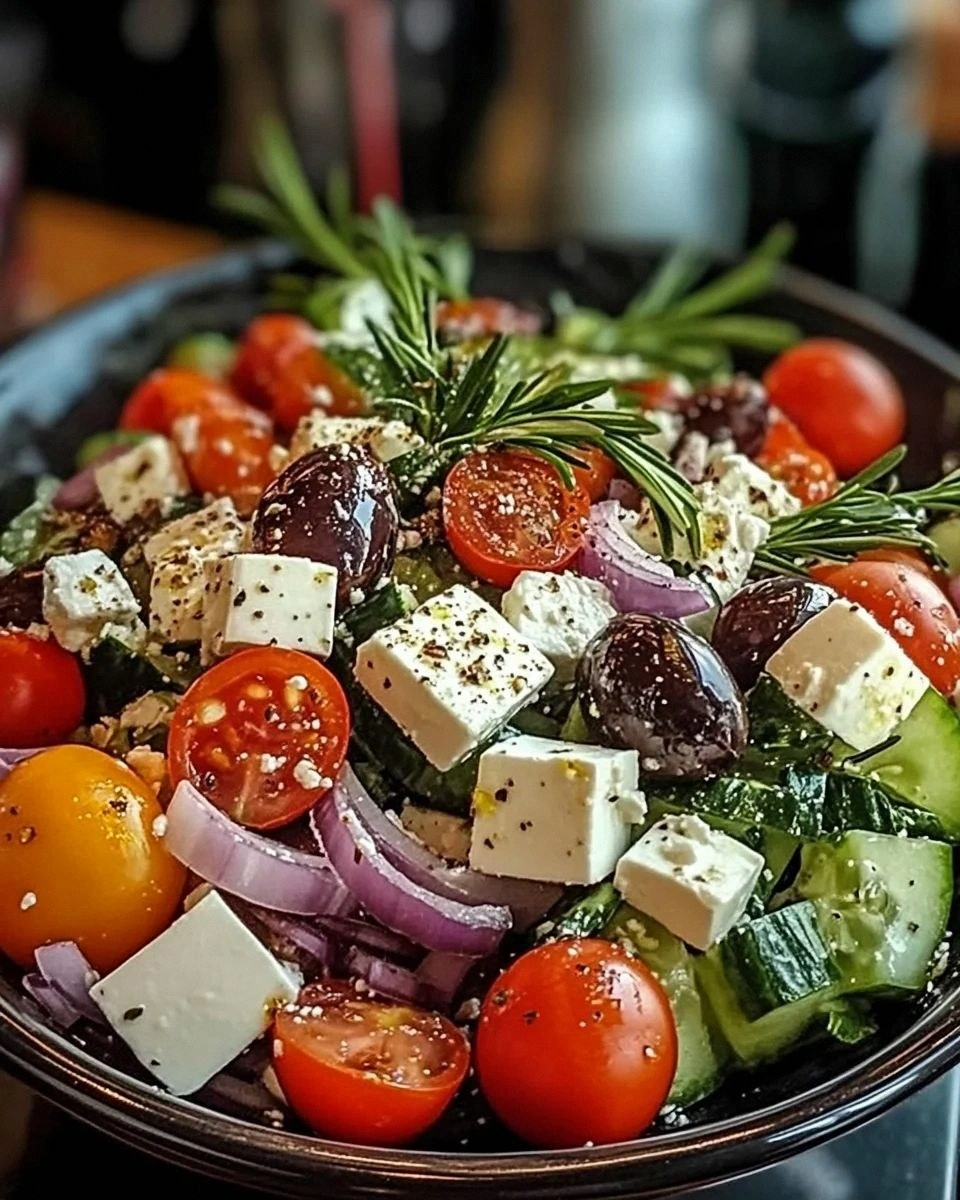
The Method — Step by Step
- Start by cutting your tomatoes into generous chunks, about 1-inch pieces. The key is cutting them just before you're ready to assemble — tomatoes start losing their flavor rapidly once cut. Place them in a large, wide bowl that gives you plenty of room to toss everything gently. Now, here's the crucial part: sprinkle them with a pinch of salt and let them sit for exactly 5 minutes. This draws out some of their juice, which will become part of your dressing, but not so much that they become mushy. The salt also intensifies their natural sweetness — it's like turning up the volume on summer itself.
- While your tomatoes are doing their thing, slice your red onion into paper-thin half-moons. The thinner, the better — you want them to almost disappear into the salad while still providing that sharp counterpoint. Now, here's my secret weapon: place the onion slices in a small bowl of cold water with a splash of white vinegar. Let them soak for 10 minutes while you prep everything else. This simple step removes the harsh bite while maintaining their crunch and vibrant color. It's like sending your onions to a spa — they come out refreshed and ready to mingle.
- Cut your cucumber into thick chunks, about the same size as your tomato pieces. If you're using English cucumbers, you can leave the skin on — it adds color and nutrients. If you're using regular cucumbers, definitely peel them, and if they're particularly seedy, scoop out the seeds with a spoon. Nobody wants a mouthful of cucumber seeds ruining their perfect bite. The cucumber chunks should be substantial enough that they don't get lost among the other ingredients — think of them as the reliable supporting actors who make the stars look even better.
- Slice your green pepper into thin rings, about 1/8-inch thick. You want them delicate enough to twirl around your fork, but substantial enough that you get that fresh crunch in every bite. Remove the seeds and white pith — they're bitter and detract from the pepper's bright, clean flavor. The pepper rings should look like little green coins scattered throughout your salad, adding pops of color and texture that make each bite interesting.
- Drain your red onions and pat them dry with paper towels. They should be crisp, mild, and ready to party. Now comes the fun part: assembly. Add the cucumbers, red onions, and green pepper to your bowl with the tomatoes. Don't toss yet — we're building layers of flavor here. Each ingredient needs to maintain its integrity while contributing to the whole symphony.
- Grab your block of authentic Greek feta — and this next part is crucial. Do not, under any circumstances, crumble it into tiny pieces. Instead, cut it into generous slabs, about 1/2-inch thick. These substantial pieces allow each person to experience the full spectrum of feta's texture, from the creamy interior to the slightly firmer edges. When you cut into a piece of feta at the table, it should break apart into soft, fluffy clouds of salty goodness.
- Time for the olives. If you're using unpitted Kalamata olives (and you should be), add them whole. The ritual of eating around the pit is part of the experience — it forces you to slow down and savor each bite. If you must use pitted olives, add them whole rather than sliced. Sliced olives lose their structural integrity and their precious oils leak out, leaving you with sad, flavorless olive fragments.
- In a small bowl or jar, combine your olive oil with a generous pinch of salt, some freshly ground black pepper, and your rubbed oregano. Whisk or shake vigorously — you're creating an emulsion that will distribute the flavors evenly. The olive oil should take on a slightly cloudy appearance as it incorporates the seasonings. This is your flavor bomb, the liquid gold that will transform your vegetables into something transcendent.
- Now for the moment of truth: drizzle the olive oil mixture over your salad. Start with less than you think you need — you can always add more, but you can't take it away. Using your hands (yes, your hands — they're your best kitchen tool), gently toss everything together. The goal is to coat every ingredient with the dressing while maintaining their individual shapes. Think of it as giving everything a gentle olive oil massage, not a wrestling match.
- Let the salad rest for exactly 5 minutes before serving. This brief pause allows the flavors to meld, the salt to draw out the vegetables' natural juices, and the olive oil to penetrate every nook and cranny. If you've done everything right, you should see a small pool of ruby-red tomato juice forming at the bottom of the bowl — this is liquid gold that you'll want to mop up with crusty bread.
That's it — you did it. But hold on, I've got a few more tricks that'll take this to another level...
Insider Tricks for Flawless Results
The Temperature Rule Nobody Follows
Room temperature vegetables are the secret weapon that separates good Greek salads from life-changing ones. When vegetables are cold from the refrigerator, their flavors are muted — it's like trying to enjoy music with cotton in your ears. Pull your tomatoes, cucumbers, and onions out at least an hour before you start cooking. The difference is staggering: room temperature tomatoes taste twice as sweet, cucumbers become more refreshing, and even the olive oil flows more smoothly, coating everything in a luxurious sheen. I learned this the hard way when I served my salad to Maria's grandmother — she took one bite, raised an eyebrow, and said "Cold vegetables? Are we eating or preserving?"
Why Your Nose Knows Best
Your nose is your most underutilized kitchen tool when it comes to Greek salad. Before you add any ingredient, smell it. A ripe tomato should smell like summer itself — warm, earthy, slightly sweet. Good olive oil should make your nose tingle with grassy, peppery notes. Even your oregano should transport you to a Mediterranean hillside. If any ingredient doesn't smell amazing on its own, it won't taste amazing in your salad. I once bought beautiful-looking tomatoes that had zero aroma — they tasted like crunchy water. Now I always smell before I buy, even if I get strange looks in the produce section.
The 5-Minute Rest That Changes Everything
Patience is a virtue, especially when it comes to Greek salad. After you've assembled everything, resist the urge to dig in immediately. Those five minutes of resting time aren't just for flavor development — they're a crucial textural transformation. The salt draws out just enough moisture from the vegetables to create a natural dressing, while the olive oil has time to penetrate the vegetables' cellular structure. It's like letting a fine wine breathe — everything becomes more harmonious, more integrated, more delicious. I'll be honest — I ate half the batch before anyone else got to try it because I couldn't wait, but the difference between eating it immediately and waiting five minutes is like comparing a rough sketch to a masterpiece.
Creative Twists and Variations
This recipe is a playground. Here are some of my favorite ways to switch things up:
The Island Version
Add a handful of capers for briny pops of flavor that transport you straight to a Greek island taverna. The capers add a tangy complexity that complements the feta beautifully. Use them sparingly — a little goes a long way. I like to add them just before serving so they maintain their distinctive texture and don't overwhelm the other flavors.
The Protein Boost
Transform your Greek salad into a complete meal by adding grilled chicken or shrimp. The key is to keep the protein simple — just olive oil, lemon, salt, and pepper. You want it to complement, not compete with, the salad's fresh flavors. Slice the grilled protein and serve it alongside or on top of the salad for a restaurant-worthy presentation.
The Winter Adaptation
When summer tomatoes are just a memory, swap them for roasted red peppers and add some halved cherry tomatoes for color and sweetness. The roasted peppers provide that sweet, concentrated flavor that winter tomatoes lack. It's not quite the same as the summer version, but it's a beautiful adaptation that keeps the spirit of the dish alive year-round.
The Mezze Transformation
Turn your Greek salad into a mezze-style spread by serving all the components separately. Arrange the chopped vegetables in separate piles on a large platter, add a block of feta, a bowl of olives, and plenty of warm pita bread. Let everyone build their own perfect bite. It's interactive, fun, and perfect for entertaining.
The Spice Route
Add a pinch of sumac for a lemony, tangy kick that brightens everything up. Sumac has a unique tartness that's different from lemon juice — it's more complex, with earthy undertones that pair beautifully with the olive oil. Just a dusting over the top before serving adds a beautiful purple hue and an extra layer of Middle Eastern flavor.
The Crunch Factor
Add some toasted pine nuts or walnuts for textural contrast and a nutty richness that elevates the whole dish. Toast them in a dry pan until they're golden and fragrant, then sprinkle them over the salad just before serving. The warmth from the toasted nuts creates an incredible contrast with the cool vegetables.
Storing and Bringing It Back to Life
Fridge Storage
I'll be honest — Greek salad is best eaten fresh, but if you must store leftovers, separate the feta and store it in its own container. The vegetables will keep for up to two days, though they'll lose their crispness. Store everything in an airtight container, but don't add any more olive oil — the vegetables will continue to release moisture, and adding more oil just creates an unpleasant pool at the bottom.
Freezer Friendly
Don't even think about freezing Greek salad — it's a crime against nature. The vegetables will turn to mush, the feta will become grainy, and the olive oil will separate. If you find yourself with more vegetables than you can use, chop them up and freeze them for soup or sauce, but don't subject your beautiful Greek salad to the freezer's icy embrace.
Best Reheating Method
There's no reheating Greek salad — it's a cold dish that celebrates fresh, crisp ingredients. If your vegetables have gone a bit limp in the fridge, you can revive them by soaking in ice water for 10-15 minutes. This rehydrates them and restores some of their crunch. Drain them well and pat dry before serving again.