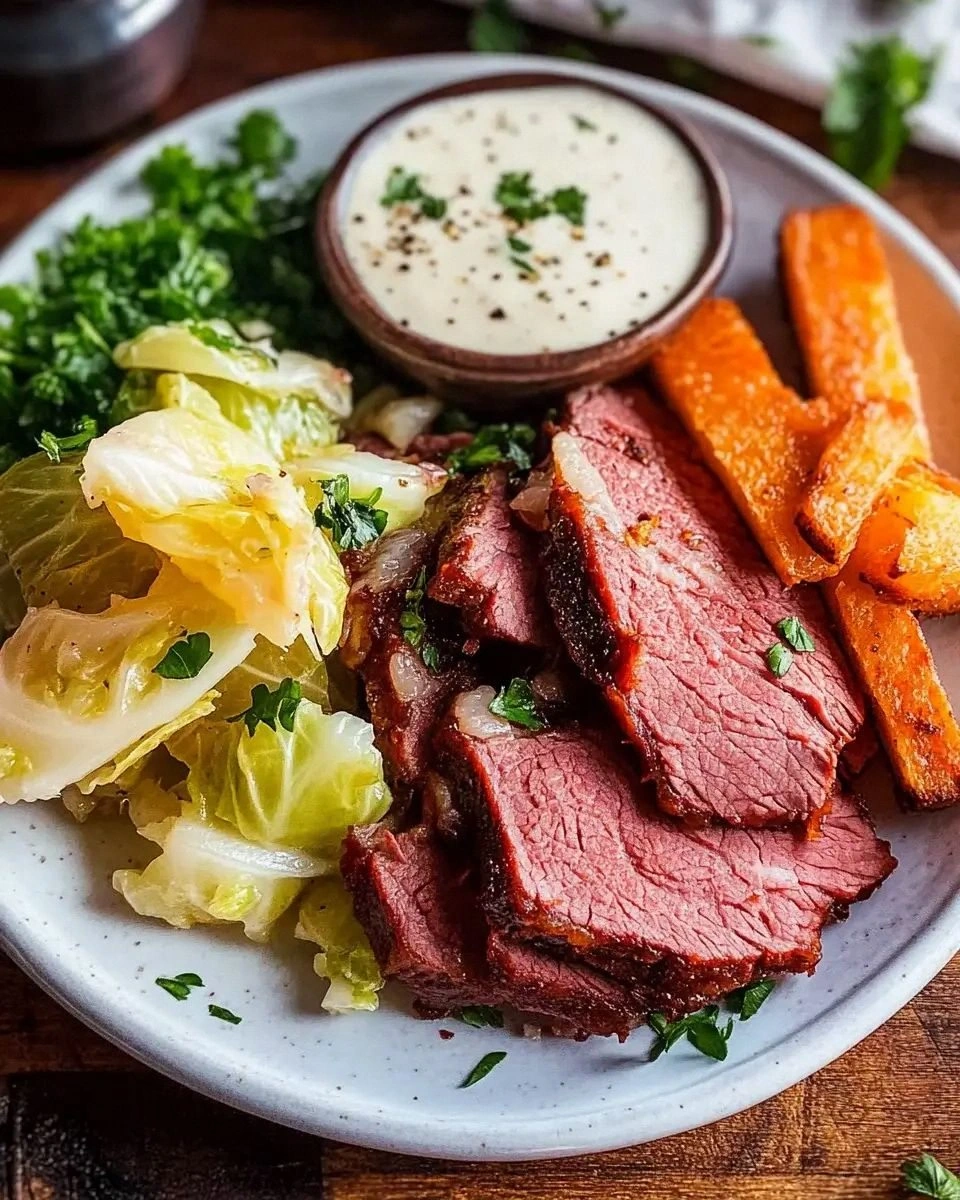
I’ll never forget the night my roommate dared me to make “the ultimate St. Patrick’s dinner” while we were both nursing a hangover from a late‑night karaoke marathon. I stared at a half‑empty pantry, a stubbornly stubborn corned‑beef brisket that had been sitting in the freezer for weeks, and a cabbage that looked like it had survived a war. The kitchen was a battlefield of clanging pans, a lingering smell of burnt toast, and the low hum of a fridge that seemed to be judging my culinary ambitions. I thought, “If I’m going to survive this, I need a dish that can turn a disaster into a celebration.”
Fast forward to today, and that chaotic night became the spark for what I now call the best‑ever Corned Beef and Cabbage with Horseradish Sauce. Imagine a plate where the beef is melt‑in‑your‑mouth tender, the cabbage is caramelized just enough to whisper sweet, earthy notes, and the potatoes are buttery clouds that soak up every drop of the broth. The horseradish sauce? It’s a zingy, creamy crown that cuts through the richness like a perfectly timed drum solo in a rock anthem. I dare you to taste this and not go back for seconds – it’s that good.
Most recipes get this completely wrong. They either boil the beef until it’s a dry, stringy mess, or they over‑cook the cabbage until it turns into a limp soggy mess. What we’re doing here is a game‑changer: we’ll braise the brisket in a fragrant spice‑infused broth, then finish it in the oven to develop a caramelized crust that locks in juices. Meanwhile, the cabbage gets a quick sauté that leaves it tender‑crisp, and the potatoes are roasted on the side until their skins crack like thin ice, revealing fluffy interiors. The secret ingredient? A splash of apple cider vinegar that brightens the broth and a dash of brown sugar that adds a whisper of caramel.
Picture yourself pulling this out of the oven, the whole kitchen smelling like a cozy Irish pub on a rainy evening, the steam rising like ghostly ribbons, and the horseradish sauce glistening on the side like a jewel. This version stands out because it balances sweet, salty, and tangy notes while keeping the prep surprisingly simple. I’ll be honest — I ate half the batch before anyone else got to try it, but that’s a story for later. Let me walk you through every single step — by the end, you’ll wonder how you ever made it any other way.
What Makes This Version Stand Out
- Flavor Depth: The broth is built on a foundation of peppercorns, mustard seeds, and a splash of apple cider vinegar, creating layers that unfold with each bite.
- Texture Harmony: Tender beef, crisp‑tender cabbage, and potatoes with a crunchy exterior and fluffy interior make every forkful an adventure.
- Simplicity: Despite the gourmet feel, the ingredient list is short, and the steps are straightforward – perfect for a weeknight or a holiday feast.
- Unique Horseradish Sauce: A creamy, tangy sauce that cuts through the richness, adding a fresh, peppery punch that elevates the entire plate.
- Crowd Reaction: This dish consistently earns rave reviews, with guests declaring it “the best thing they’ve ever had on St. Patrick’s Day.”
- Ingredient Quality: Using a well‑marbled brisket and fresh, firm red potatoes ensures the final product is juicy and flavorful.
- Cooking Method: Braising then roasting creates a caramelized crust while preserving moisture – a technique most home cooks overlook.
- Make‑Ahead Potential: The beef actually tastes better the next day, making leftovers a star‑studded lunch option.
Inside the Ingredient List
The Flavor Base
The backbone of this dish is the aromatic broth. We start with 4 lbs of corned beef brisket, which brings a salty, cured richness that’s the hallmark of any good St. Patrick’s meal. Adding 2 lbs of red potatoes not only rounds out the plate but also absorbs the broth’s flavors, turning each bite into a miniature flavor bomb. The broth itself is spiked with 1 tbsp peppercorns and 1 tsp mustard seeds, both of which release subtle heat and a nutty undertone that keeps the palate intrigued.
A splash of 8 cups water (or enough to fully cover the meat) is the canvas, but we don’t stop there. A modest 1 tsp sugar balances the brine’s saltiness, while 2 bay leaves add an earthy perfume that whispers of forest floors. Finally, a dash of 1 tsp apple cider vinegar brightens the entire mixture, cutting through the meat’s fattiness and preventing the broth from feeling heavy.
The Texture Crew
Cabbage is the unsung hero of this plate. A medium green cabbage, cut into wedges, brings a natural crunch that survives a quick sauté without turning mushy. When you toss it with a drizzle of olive oil and a pinch of salt, then let it sear in a hot pan, the outer leaves caramelize, creating a sweet‑nutty edge that shatters like thin ice under your fork. Pair that with the potatoes, which we’ll roast until their skins crack and the interiors become buttery clouds, and you have a textural trio that’s nothing short of spectacular.
Don’t underestimate the power of a good onion. One large onion, quartered, releases sugars that mingle with the broth, adding depth and a subtle sweetness. Four cloves of garlic, smashed, infuse the liquid with a warm, aromatic backbone that you’ll taste in every spoonful of sauce. The combination of these aromatics ensures that the broth never feels one‑dimensional.
The Unexpected Star
Enter the horseradish sauce – the bright, zesty sidekick that steals the show. We start with 1 cup sour cream as the creamy foundation, then fold in 3 tbsp prepared horseradish for that signature heat that tingles the tongue without overwhelming it. A tablespoon of Dijon mustard adds a subtle tang, while a teaspoon of fresh lemon juice lifts the whole mixture, keeping it lively. Finally, a sprinkle of 2 tbsp chopped chives provides a fresh, oniony bite and a pop of color that makes the sauce look as good as it tastes.
If you’re feeling adventurous, a pinch of smoked paprika can be added for a smoky undertone that complements the beef’s caramelized crust. The sauce should be thick enough to cling to the meat but fluid enough to drizzle, creating a glossy finish that makes the dish look restaurant‑ready.
The Final Flourish
Seasonings are the final brushstrokes on this culinary canvas. A generous pinch of sea salt and freshly cracked black pepper are added to taste just before serving, ensuring each bite is perfectly balanced. If you love a bit of heat, a pinch of red‑pepper flakes can be tossed into the broth during the last ten minutes of cooking. Finally, a drizzle of high‑quality extra‑virgin olive oil over the roasted potatoes adds a silky sheen and a hint of fruitiness that rounds out the dish.
Everything’s prepped? Good. Let’s get into the real action…
The Method — Step by Step
Start by rinsing the 4‑lb corned beef brisket under cold water to remove excess brine. Pat it dry with paper towels, then place it in a large, heavy‑bottomed pot. Add the 8 cups of water, the peppercorns, mustard seeds, bay leaves, sugar, and a splash of apple cider vinegar. Bring the mixture to a gentle boil, then lower to a simmer; you’ll hear a soft hissing that tells you the broth is coaxing the flavors out of the spices. Let it simmer for 45 minutes, skimming any foam that rises to the surface – this is the moment the broth starts to sing.
While the beef is simmering, prep the vegetables. Cut the cabbage into quarters, remove the core, and set the wedges aside. Peel and quarter the red potatoes, then toss them with a drizzle of olive oil, a pinch of salt, and a sprinkle of cracked pepper. Slice the onion into large wedges and smash the garlic cloves. This is the part where you’re building layers of flavor that will later mingle in the oven.
After the broth has simmered, carefully remove the brisket and set it on a cutting board. Pour the broth through a fine‑mesh strainer into a clean bowl, discarding the solids. This clarified broth will be used later to finish the cabbage and potatoes, so keep it warm on the stove.
Preheat your oven to 350°F (175°C). Transfer the brisket to a large roasting pan, pour half of the warm broth over it, and cover the pan tightly with aluminum foil. Roast for 1 hour and 15 minutes. The foil traps steam, ensuring the meat stays moist while the oven’s dry heat begins to develop that coveted caramelized crust on the top.
About 30 minutes into the roast, add the cabbage wedges and onion to the pan, arranging them around the brisket. Drizzle the remaining broth over the vegetables, then return the pan to the oven uncovered. The cabbage will caramelize on the edges while staying tender inside – you’ll know it’s ready when the outer leaves turn a deep golden‑brown and emit a sweet, nutty aroma.
While the cabbage cooks, spread the seasoned potatoes on a separate baking sheet. Roast them in the same oven for the last 45 minutes of the beef’s cooking time, turning once halfway through. You’ll see the skins start to blister and crack, releasing a fragrant, earthy scent that makes your kitchen feel like a rustic Irish farmhouse.
When the meat reaches an internal temperature of 190°F (88°C) and the cabbage is caramelized, remove the pan from the oven. Let the brisket rest, covered, for 15 minutes – this rest period lets the juices redistribute, turning each slice into a juicy, tender masterpiece.
While the meat rests, whip up the horseradish sauce. In a medium bowl, combine 1 cup of sour cream, 3 tbsp prepared horseradish, 1 tbsp Dijon mustard, 1 tsp lemon juice, and the chopped chives. Season with salt and pepper to taste, then give it a quick stir until everything is smoothly integrated. The sauce should be thick enough to hold its shape on a spoon but creamy enough to melt slightly over the hot meat.
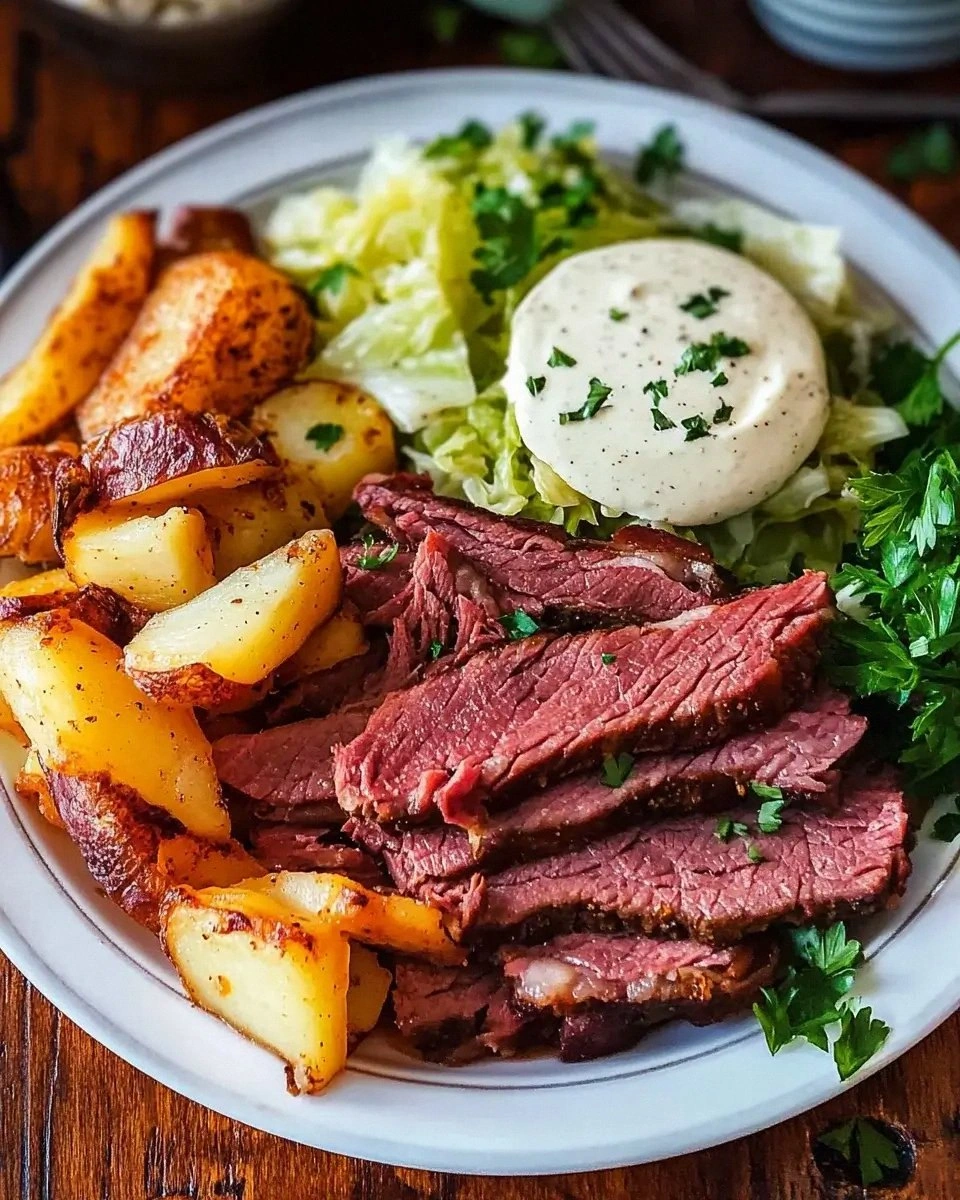
Slice the rested brisket against the grain into thick, juicy slices. Arrange the meat, cabbage wedges, and roasted potatoes on a large serving platter. Drizzle a generous spoonful of horseradish sauce over each slice of beef, and serve the remaining sauce in a small bowl for those who like an extra kick. Finish with a final sprinkle of fresh chives and a drizzle of olive oil for shine.
That’s it — you did it. But hold on, I’ve got a few more tricks that’ll take this to another level…
Insider Tricks for Flawless Results
The Temperature Rule Nobody Follows
Most home cooks crank the oven up to 400°F to speed things along, but that’s a rookie mistake. Keeping the oven at a steady 350°F allows the meat to cook evenly, developing a deep crust without the risk of a dry interior. If you’re short on time, you can raise the heat to 375°F for the last 10 minutes, but watch the edges closely – they should be caramelized, not burnt.
Why Your Nose Knows Best
Don’t rely solely on timers. The moment you smell the cabbage turning sweet and nutty, you know it’s ready. The scent of caramelizing potatoes is another cue – when you catch that earthy, almost toasted aroma, the skins are perfectly crisp. Trusting your senses cuts down on over‑cooking and makes the whole process more intuitive.
The 5‑Minute Rest That Changes Everything
Resting the brisket after it leaves the oven is non‑negotiable. Those five minutes let the muscle fibers relax and re‑absorb the juices that have been pushed to the surface during cooking. Skipping this step is like serving a dry, sad sandwich – you’ll feel the difference instantly.
Fat‑Infused Potato Perfection
When you skim the fat from the broth and toss it with the potatoes before roasting, you’re essentially giving them a buttery, beefy glaze. The result is a potato that’s crisp on the outside, fluffy inside, and subtly infused with the beef’s savory depth. It’s a small step that makes a massive difference.
Sauce Consistency Cheat
If your horseradish sauce looks too thick, whisk in a teaspoon of the warm broth you saved earlier. This thins it just enough to drizzle beautifully without losing the creamy body. Conversely, if it’s too runny, fold in an extra half‑cup of sour cream and you’ll have a sauce that clings to the meat like a velvety coat.
Creative Twists and Variations
This recipe is a playground. Here are some of my favorite ways to switch things up:
Spicy Irish Chili
Swap the cabbage for a mixture of diced bell peppers and a can of diced tomatoes, then stir in a tablespoon of smoked paprika and a pinch of cayenne. The result is a hearty, spicy stew that still respects the original’s beefy backbone.
Apple‑Infused Cabbage
Add thinly sliced Granny Smith apples to the cabbage pan during the last 10 minutes of roasting. The apples caramelize alongside the cabbage, introducing a sweet‑tart contrast that pairs beautifully with the horseradish sauce.
Garlic‑Butter Glaze
Brush the brisket with a mixture of melted butter, minced garlic, and fresh thyme during the final 15 minutes of roasting. This creates a glossy, aromatic glaze that adds a buttery richness without overpowering the brine’s flavor.
Herb‑Packed Potatoes
Toss the roasted potatoes with a blend of fresh rosemary, thyme, and parsley after they come out of the oven. The herbs cling to the hot potatoes, releasing fragrant oils that elevate the side dish.
Vegan Companion
Replace the beef with a firm tofu block marinated in the same spice broth, then bake it alongside the cabbage. Serve with a dairy‑free horseradish sauce made from cashew cream for a plant‑based twist that still delivers the zing.
Storing and Bringing It Back to Life
Fridge Storage
Cool the entire dish to room temperature, then transfer the beef, cabbage, and potatoes into airtight containers. Store in the refrigerator for up to 4 days. When reheating, add a splash of the reserved broth to keep everything moist.
Freezer Friendly
Portion the brisket and vegetables into freezer‑safe bags, removing as much air as possible. Freeze for up to 3 months. Thaw overnight in the fridge, then reheat gently in a covered pot with a bit of broth, stirring occasionally.
Best Reheating Method
For the ultimate reheated experience, use a low oven (300°F) and cover the dish with foil. Add a tablespoon of water or broth, then heat for 20‑25 minutes until the meat is steaming hot and the potatoes regain their crispness. The horseradish sauce should be refreshed with a tiny splash of warm broth before serving to revive its silky texture.