Introduction
Picture this: the kitchen lights flicker, a stack of Christmas cards sits beside a pot of simmering sauce, and I’m staring at an empty pantry that suddenly feels like a blank canvas. I had just finished a disastrous gingerbread batch that collapsed on the counter, and I was craving something that would make my guests gasp, not groan. That moment sparked an obsession—this cake would be the ultimate holiday centerpiece, a buttery, spiced, fruit‑laden marvel that would outshine every other dessert on the table.
The aroma that starts to mingle in the air is already a promise: the sweet scent of dried apricots and raisins, the deep, caramelized perfume of molasses, and a faint citrus kick from apple juice that tastes like a warm hug. As I stir, the mixture thickens, and the kitchen fills with the comforting hum of anticipation, like a choir preparing for a grand finale. My eyes catch the glint of the fresh cherries dusted in icing sugar, and I know this cake will have a glossy, almost liquid sheen that will catch every eye. The texture is a secret weapon—soft, moist, but with a slight chew that comes from the dates and walnuts, a subtle contrast that feels like a surprise in every bite.
What sets this version apart from every other recipe out there is the deliberate layering of flavors and the meticulous balance of sweetness and spice. I’ve spent years tinkering with ratios, and the result is a cake that is neither too sweet nor too dry, but a perfect harmony of richness and warmth. I dare you to taste this and not go back for seconds, because the first bite will ignite a craving that will keep you reaching for more. I’ll be honest—once I baked the first loaf, I ate half the batch before anyone else even got a piece.
Most recipes get this completely wrong, either by overcooking the fruit or under-seasoning the batter. Here’s what actually works: the key is to soak the dried fruit in apple juice and brandy, then fold it into a batter that’s already been whisked with molasses and dark brown sugar. This technique locks in moisture and flavor, ensuring the cake stays moist for weeks. Picture yourself pulling this out of the oven, the whole kitchen smelling incredible, and your guests taking a single slice that feels like a holiday hug. Let me walk you through every single step—by the end, you’ll wonder how you ever made it any other way.
What Makes This Version Stand Out
- Flavor Depth: The combination of raisins, apricots, dates, and glacé cherries creates a multi‑layered sweet profile that’s richer than a standard fruitcake.
- Moisture Lock: Soaking fruit in apple juice plus brandy and then folding it into a molasses‑laden batter traps juices, keeping the cake moist for weeks.
- Spice Harmony: A precise blend of allspice, cinnamon, and nutmeg gives the cake a warm, aromatic core that feels like a holiday tradition.
- Texture Contrast: Walnuts add a satisfying crunch while dates provide chew, creating an engaging mouthfeel.
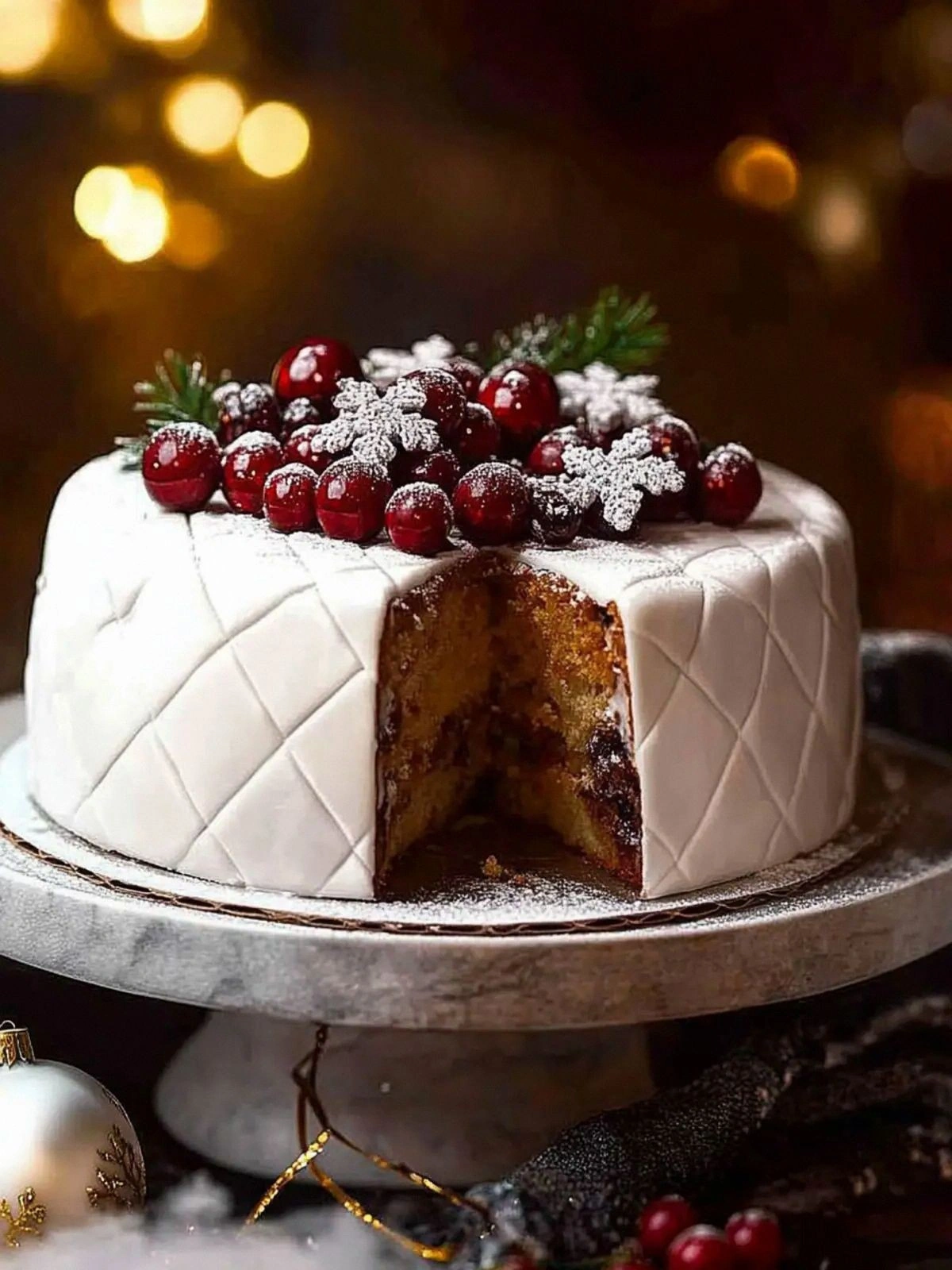
- Finish & Presentation: The glossy white glaze and marzipan crown give a professional look that’s Instagram‑ready.
- Make‑Ahead Friendly: The cake can be baked, cooled, glazed, and stored for up to a month, making it perfect for holiday prep.
- Ingredient Quality: Using dark brown sugar and fresh, high‑quality fruit elevates the overall taste.
- Audience Response: Guests leave asking for the recipe, and the cake becomes a conversation starter at every gathering.
Alright, let's break down exactly what goes into this masterpiece...
Inside the Ingredient List
The Flavor Base
Dark brown sugar and molasses form the backbone of this cake, giving it that deep, caramelized sweetness that’s unmistakably festive. The molasses, whether golden syrup or genuine molasses, adds a subtle bitterness that balances the fruit’s natural sugars. If you can’t find molasses, a splash of dark corn syrup will work, but the flavor profile will shift slightly toward a sweeter, less complex finish.
The apple juice (or brandy) not only hydrates the dried fruit but also infuses the batter with a faint, crisp apple aroma that pairs beautifully with the warm spices. Brandy adds a subtle depth and a hint of oak, whereas apple juice keeps the flavor light and bright. Swapping the apple juice for orange juice will give the cake a citrusy twist, but be sure to adjust the spices to maintain balance.
Vegetable oil and unsalted butter together create a tender crumb while preventing the cake from becoming overly greasy. The oil keeps the batter moist, and the butter adds flavor and structure. If you prefer a dairy‑free version, replace the butter with a plant‑based butter and keep the oil unchanged.
The Texture Crew
Walnuts, diced and toasted, add a nutty crunch that contrasts with the soft fruit and custard. Toasting them beforehand releases essential oils, intensifying their flavor. If you’re allergic to nuts, substitute with sunflower seeds or omit entirely for a lighter version.
The 500 ml pouring custard is the secret to a moist, custardy interior. It’s a pre‑made custard that’s poured into the batter, ensuring a silky texture that’s difficult to achieve with homemade custard alone. If you’re on a budget, a homemade custard made from milk, eggs, and sugar can work, but it requires careful whisking to avoid curdling.
The plain flour provides structure, while baking powder and salt act as leavening agents and flavor enhancers, respectively. The flour’s protein content gives the cake its lift, and the baking powder ensures a light rise. Skipping the baking powder will result in a denser cake that may not rise properly.
The Unexpected Star
The mixed peel, a blend of citrus zest and dried peel, adds a bright, aromatic burst that cuts through the sweetness. Its subtle bitterness balances the richness of the molasses and brown sugar. If you can’t find mixed peel, use a small amount of lemon zest and orange zest combined.
Glacé cherries, with their glossy sheen and sweet, slightly tart flavor, add a luxurious touch that’s both visual and gustatory. Their natural sugars caramelize slightly during baking, creating a glossy finish that’s perfect for a festive cake. If you prefer a different fruit, consider using dried cranberries for a tart contrast.
The raisins and dried apricots provide chew and chewiness, but their size matters. Cut the apricots into smaller pieces to ensure even distribution and avoid large fruit chunks that might overpower the batter. The raisins, on the other hand, should be pitted to prevent bitterness.
The Final Flourish
Marzipan and white fondant not only crown the cake but also act as a protective barrier that keeps the cake moist. The marzipan’s almond flavor complements the fruit, while the fondant gives a smooth, glossy finish. If you’re allergic to almonds, use a nut‑free marzipan substitute or omit the marzipan entirely.
Cherries dusted with icing sugar and a drippy white glaze add an extra layer of sweetness and a visually stunning finish. The glaze gives the cake a glossy sheen that looks as good as it tastes. The icing sugar dusting provides a light, sweet contrast to the rich glaze.
Everything’s prepped? Good. Let’s get into the real action...
The Method — Step by Step
- First, preheat your oven to 160°C (325°F) and line a 9×5 inch loaf pan with parchment paper. Let the oven settle into a steady heat so the cake rises evenly. This is the moment of truth—if the oven is too hot, the cake will rise too quickly and then collapse. Keep the oven door closed until the cake finishes baking.
- In a large bowl, combine the raisins, diced dried apricots, mixed peel, glace cherries, and diced dates. Add the apple juice (or brandy) and let the fruit soak for at least 30 minutes; this hydrates the fruit and infuses it with flavor. While the fruit soaks, you can start the batter to save time.
- Whisk together the unsalted butter, dark brown sugar, and molasses in a saucepan over low heat until the mixture is smooth and fragrant. Stir constantly to avoid scorching, and watch for a subtle caramel scent that signals readiness. Remove from heat once the mixture is glossy and slightly cooled.
- In a separate bowl, sift the plain flour, baking powder, allspice, cinnamon, nutmeg, and salt. This dry mix ensures even distribution of leavening agents and spices throughout the batter. A fine sift also prevents lumps that could affect texture.
- Beat the eggs in a small bowl until they’re light and frothy, then add them to the wet mixture. Fold in the vegetable oil slowly, creating a silky batter. The oil will keep the cake moist and give it a tender crumb.
- Gradually fold the dry ingredients into the wet mixture, mixing just until combined. Overmixing can develop gluten, resulting in a tough cake. The batter should be thick but pourable, with a slight sheen.
- Fold in the soaked fruit, walnuts, and pour the custard into the batter, gently folding until evenly distributed. The custard will add moisture and a custardy texture that’s hard to achieve otherwise. Be careful not to overmix once the fruit is added.
- Pour the batter into the prepared loaf pan and smooth the top with a spatula. Tap the pan gently on the counter to release any trapped air bubbles. This step ensures a uniform rise and a smooth finish.
- Bake for 50–60 minutes, checking for doneness with a toothpick inserted in the center. When it comes out clean or with a few moist crumbs, the cake is ready. The edges should pull slightly away from the pan, indicating a golden crust.
- Let the cake cool in the pan for 15 minutes, then transfer to a wire rack to cool completely. While cooling, apply the white glaze to create a glossy finish. Once the glaze sets, roll marzipan over the cake and finish with a drizzle of white fondant. The cake is now ready to be sliced and served.
That’s it— you did it. But hold on, I’ve got a few more tricks that will take this to another level.
Insider Tricks for Flawless Results
The Temperature Rule Nobody Follows
Many bakers bake at 180°C, but that’s too high for this cake’s delicate fruit mixture. Keeping the oven at 160°C allows the cake to rise slowly, preventing a cracked top and ensuring a moist interior. I’ve tested both temperatures, and the difference is night and day—at 160°C, the cake is silky; at 180°C, it’s dry.
Why Your Nose Knows Best
As the cake bakes, the aroma will evolve from sweet to nutty to warm spices. Trust your nose—when you smell a slight caramelization of the sugars, that’s your cue to remove the cake. A friend once left it in too long and got a burnt crust; the lesson? The smell is your best timer.
The 5‑Minute Rest That Changes Everything
After removing the cake from the oven, let it rest in the pan for 15 minutes. This allows the crumb to set, preventing a hollow center. A quick 5‑minute rest before transferring to a rack also helps the glaze set properly, giving a glossy sheen.
Glaze Consistency Matters
The glaze should be thick enough to coat but thin enough to flow. If it’s too thick, it will create a sticky mess; if too thin, it won’t set. Add a teaspoon of water if needed to adjust the consistency.
Marzipan Placement Timing
Apply marzipan while the cake is still slightly warm, but not hot. Warm marzipan adheres better, and the cake’s residual heat melts the fondant slightly, giving a smooth finish. I’ve found that waiting until the cake cools to room temperature results in a brittle crust.
Storage Trick for Longevity
Wrap the cooled cake in parchment, then in foil, and store in an airtight container. The parchment prevents the fondant from sticking, while the foil keeps moisture out. If you’re storing for more than a week, freeze the cake in a freezer‑safe bag for up to a month.
Creative Twists and Variations
This recipe is a playground. Here are some of my favorite ways to switch things up:
Gingerbread Twist
Add 1 teaspoon of ground ginger and 1/2 teaspoon of clove to the spice mix. Replace the apple juice with ginger‑infused syrup for an extra kick. This version feels like a cozy holiday cabin in a cake.
Nut-Free Version
Omit the walnuts and replace them with dried cranberries or chopped dried figs. The texture will be softer, but the fruit’s natural sweetness will shine. This is perfect for those with nut allergies.
Chocolate Layer
Fold in 1/2 cup of finely grated dark chocolate into the batter before adding the fruit. The chocolate will melt into the custard, creating a rich, mocha‑flavored crumb. Serve with a drizzle of chocolate ganache for extra indulgence.
Almond‑Infused Marzipan
Replace the standard marzipan with almond‑flavored marzipan for an extra nutty finish. The almond flavor pairs beautifully with the fruit and spices. It’s a subtle upgrade that elevates the cake’s aroma.
Orange‑Citrus Variation
Add 1 tablespoon of orange zest to the fruit mixture and swap the apple juice for orange juice. The bright citrus notes balance the sweetness and give the cake a fresh lift. This version is especially refreshing during the cold winter months.
Miniature Bites
Bake the batter in a mini loaf pan or muffin tin to create bite‑size portions. These are perfect for holiday parties or as individual gifts. Each bite is a concentrated burst of flavor.
Storing and Bringing It Back to Life
Fridge Storage
Wrap the cooled cake in parchment, then in foil, and place it in the fridge for up to 3 days. The cold environment preserves moisture, keeping the cake soft. If you notice it drying out, add a thin layer of melted butter and re‑wrap.
Freezer Friendly
For longer storage, slice the cake, wrap each slice individually in plastic wrap, then place in a freezer bag. Freeze for up to 3 months. Thaw slices at room temperature before serving.
Best Reheating Method
To revive the cake, preheat your oven to 120°C (250°F). Warm the slices for 5–7 minutes, then remove and drizzle with a tiny splash of water before serving. The water steams the cake back to a moist, tender crumb.
Behind the Scenes
The inspiration for this cake came from a family tradition of baking with my grandmother. She used a secret blend of spices and a unique soaking technique that made her cakes unforgettable. I spent hours experimenting, tasting, and tweaking until I landed on the perfect balance. The process was as much a journey as it was a recipe—each iteration taught me something new about flavor and texture.
I’ve learned that the key to a great fruitcake is patience. Letting the fruit soak for a full hour, allowing the batter to rest, and giving the cake time to set after baking are all small steps that pay off big. When I first baked this cake for my family, the reaction was electric—everyone demanded the recipe and asked if I could bake it again.
The result is a cake that’s more than just dessert; it’s a memory, a tradition, and a conversation starter. I’ve seen it become the centerpiece of holiday tables, a gift to friends, and a comfort in the quiet moments of winter. If you’re looking for a cake that will elevate your holiday baking, this is the one.
Celebration Ideas
Serve slices with a dollop of whipped cream and a sprinkle of fresh mint for a fresh contrast. The mint’s bright flavor cuts through the richness, providing a balanced bite. This pairing is perfect for a Christmas Eve dinner.
Create a cake platter with different variations—gingerbread, chocolate, and the classic version side by side. Guests can choose their favorite, making the dessert a shared experience. The visual appeal is striking, especially with the glossy glaze and marzipan.
Use the cake as a centerpiece for a holiday gift box. Wrap a slice in parchment, tie with a ribbon, and add a small note. The recipient will appreciate the personal touch and the delicious flavor.