I still remember the night I tried to make a pumpkin soup for the first time, and the kitchen turned into a disaster zone. The pumpkin puree I bought from the store was a thick, syrupy mess that refused to mingle with the broth, and the onions I sautéed were browned to a charred black, giving the whole pot a bitter undertone. My friends called it "the soup that tried to be a dessert and failed," and I was ready to give up. But then I found a handful of sage leaves in the pantry, and the moment the fragrant green scent hit my nose, everything shifted—this was going to be something different.
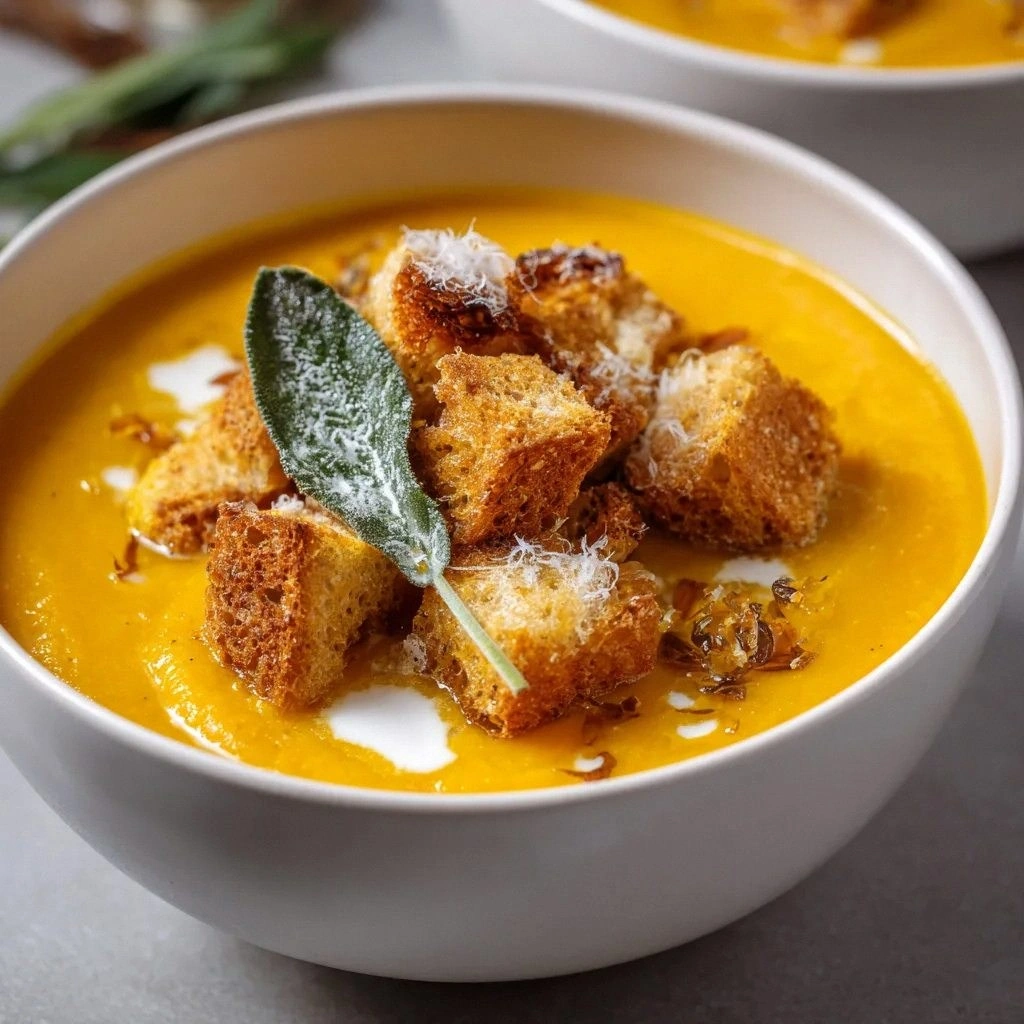
Picture the scene: a golden, velvety bowl of pumpkin swirling like a sunrise, the aroma of garlic and onions dancing in the air, a gentle hiss from the simmering pot, and the subtle crackle of the croutons in the oven. The first spoonful is a silky smoothness that coats your palate, followed by a bright, earthy kick from sage, and a warm, comforting sweetness from cinnamon that lingers like a cozy blanket. The texture is a harmonious blend of silky soup and crispy croutons, each bite delivering a satisfying contrast. I could almost hear the crunch echoing through the kitchen, a tiny symphony that made me grin from ear to ear.
What makes this version stand out is that it doesn't just follow a recipe—it's a recipe that feels like a hug in a bowl. I dare you to taste this and not go back for seconds, because once you get a taste, you’ll know what the rest of your life is missing. The secret? A bold use of fresh sage in the croutons that elevates the pumpkin's natural sweetness, a splash of heavy cream that gives the soup a silky finish, and a dash of nutmeg that adds a layer of complexity no one else considers. It's hands down the best version you'll ever make at home, and if you've ever struggled to make pumpkin soup that actually tastes good, you're not alone—this is the fix.
Most recipes get this completely wrong by over‑cooking the pumpkin or under‑seasoning the broth. Here’s what actually works: a gentle simmer that preserves the pumpkin’s bright flavor, a balanced blend of spices that bring depth, and croutons that stay crisp and fragrant. Picture yourself pulling this out of the oven, the whole kitchen smelling incredible, the steam curling like wisps of cloud. Stay with me here—this is worth it. Let me walk you through every single step—by the end, you'll wonder how you ever made it any other way.
What Makes This Version Stand Out
- Flavor: The pumpkin puree is pure, unadulterated sweetness that forms the soup’s base, while a pinch of nutmeg adds a subtle warmth that lingers on the palate. The addition of fresh sage to the croutons provides an earthy counterpoint that keeps the dish from feeling one‑dimensional.
- Texture: The soup is silky smooth, achieved by blending the pumpkin to a fine consistency before simmering. The croutons, on the other hand, are crisp on the outside and tender on the inside, creating a delightful crunch that punctuates each spoonful.
- Simplicity: With only ten ingredients, this recipe is a quick, approachable option for weeknight dinners, yet it feels gourmet in every bite.
- Uniqueness: The combination of sage in the croutons and a splash of heavy cream in the soup gives this dish a distinctive twist that sets it apart from classic pumpkin soups.
- Ingredient Quality: Using a high‑quality pumpkin puree and fresh sage makes a noticeable difference in taste; the aroma alone can elevate the entire dish.
- Cooking Method: Sautéing the aromatics first builds depth, then simmering gently prevents the pumpkin from breaking down into a mush.
- Make‑Ahead Potential: The soup can be made a day in advance; the flavors develop beautifully over time, making it a perfect meal prep option.
- Crowd Reaction: Friends rave about the unexpected crunch and the comforting warmth, making it a go‑to dish for gatherings.
Inside the Ingredient List
The Flavor Base
Pumpkin puree is the star of the show, providing a natural sweetness that is both comforting and slightly sweet. When you use a high‑quality puree, the flavor is deep and unadulterated, avoiding the artificial sweetness that some store‑bought versions bring. If you skip this step and try to use raw pumpkin, the soup will taste raw and under‑cooked, and the texture will be lumpy. For an extra touch of depth, you can roast the pumpkin cubes before pureeing them; the caramelized edges add a subtle smoky undertone.
The Texture Crew
Heavy cream is the secret to that silky, luxurious mouthfeel. It coats the tongue like velvet, balancing the earthiness of the pumpkin and the sharpness of sage. If you’re looking for a lighter option, coconut milk offers a creamy texture with a hint of tropical flavor, but it will change the overall taste profile. A small splash of broth can be added during blending if the soup feels too thick, ensuring a smooth consistency that pours easily.
The Unexpected Star
Fresh sage may seem like a minor detail, but it’s the key to elevating this dish. Sage’s earthy, slightly peppery aroma cuts through the sweetness of the pumpkin, creating a balanced flavor that feels both comforting and sophisticated. If you’re out of sage, a pinch of dried thyme or oregano can work, but the aroma will shift noticeably. The sage is incorporated into the croutons, so it crisps up and releases its fragrance during baking.
The Final Flourish
Ground cinnamon and nutmeg add a warm spice profile that enhances the pumpkin’s natural sweetness. The cinnamon brings a sweet, woody note, while the nutmeg offers a subtle nutty warmth that lingers after each bite. If you prefer a spicier kick, a pinch of cayenne pepper can be added, but be careful—too much can overpower the delicate balance. Salt and pepper are essential for seasoning; they bring all the flavors together and ensure the soup isn’t flat.
Everything's prepped? Good. Let's get into the real action...
The Method — Step by Step
- Heat a large pot over medium heat and drizzle in the olive oil. Once the oil shimmers, add the chopped onion and sauté until translucent, about 5 minutes. The onion should be soft and slightly golden, not browned. This step builds the flavor base and releases the onion’s natural sugars.
- Add the minced garlic and cook for an additional 30 seconds, just until fragrant. Watch the garlic; if it starts to brown, lower the heat. A burnt garlic will give the soup a bitter note that ruins the balance.
- Pour in the pumpkin puree and stir to combine with the aromatics. The mixture should look like a smooth, orange custard. Let it simmer for 2 minutes, allowing the flavors to meld.
- Slowly pour in the vegetable broth, stirring constantly. The liquid should coat the pumpkin without leaving any dry spots. Bring the mixture to a gentle simmer and let it cook for 10 minutes, allowing the pumpkin to soften fully.
- Add the ground cinnamon, nutmeg, salt, and pepper. Stir well to distribute the spices evenly. The aroma should be warm and inviting, like a cozy cabin in autumn.
- Use an immersion blender to puree the soup until silky smooth. If you don’t have a blender, transfer the mixture in batches to a countertop blender, being careful with hot liquid. The goal is a velvety texture that coats the spoon.
- Stir in the heavy cream and let the soup return to a gentle simmer for another 5 minutes. The cream should be fully incorporated, giving the soup a luxurious sheen. Be careful not to let it boil; you want a gentle heat to preserve the delicate flavors.
- While the soup simmers, prepare the croutons. Toss the cubed bread with olive oil, chopped sage, salt, and pepper until evenly coated. Spread the bread cubes on a baking sheet in a single layer.
- Bake the croutons in a preheated oven at 375°F (190°C) for 12-15 minutes, or until golden and crisp. Turn them halfway through for even browning. The sage should release its aroma, filling the kitchen with a warm, herbaceous scent.
- Serve the soup hot, spooning a generous handful of sage croutons on top of each bowl. The contrast between the silky soup and the crunchy croutons is a flavor revelation. Garnish with a swirl of heavy cream or a few fresh sage leaves if you’re feeling fancy.
That's it — you did it. But hold on, I've got a few more tricks that'll take this to another level...
Insider Tricks for Flawless Results
The Temperature Rule Nobody Follows
Many people think that a high simmer is best for soups, but this recipe thrives at a low, gentle heat. Keeping the temperature low ensures the pumpkin remains tender without breaking down into a mush. I once over‑boiled a pumpkin soup and it turned into a thick, watery mess. The trick is to let the flavors mingle slowly, letting the spices fully infuse the broth.
Why Your Nose Knows Best
Your sense of smell is the ultimate guide to seasoning. As you cook, pause and inhale the aroma of the simmering soup. If it smells too mild, add a pinch more salt or a dash of pepper. If the spices feel too overpowering, a splash of broth can mellow them out.
The 5-Minute Rest That Changes Everything
After you finish cooking, let the soup rest for five minutes before serving. This short pause allows the flavors to settle and the soup to thicken slightly, giving it a richer mouthfeel. I’ve seen people skip this step and end up with a soup that tastes flat.
Crunch Without the Burn
If you’re using a convection oven, lower the temperature by 25°F to prevent the croutons from burning too quickly. The convection fan can cause the edges to crisp up faster than the center. A quick flip halfway through also helps achieve even browning.
The Secret to Creamy Consistency
If you prefer a thinner soup, add a splash of water or broth after blending. For a thicker, more stew‑like texture, let the soup reduce on the stove for a few extra minutes. The key is to test the thickness with a spoon; it should coat the back of the spoon without dripping.
Creative Twists and Variations
This recipe is a playground. Here are some of my favorite ways to switch things up:
Spicy Pumpkin Surprise
Add a pinch of cayenne pepper or a dash of hot sauce to the soup for a fiery kick. The heat pairs beautifully with the sweetness of the pumpkin, creating a dynamic flavor profile that’s perfect for adventurous palates.
Vegan Velvet
Swap the heavy cream for coconut milk and use olive oil for the croutons instead of butter. The result is a silky, dairy‑free soup that still delivers on richness, making it suitable for vegans and lactose‑intolerant diners.
Herb Garden Twist
Replace sage with fresh rosemary or thyme in the croutons, and add a handful of chopped parsley to the soup. The herbal notes give the dish a fresh, green contrast to the warm pumpkin base.
Breakfast Bowl
Serve the soup with a poached egg on top and a drizzle of maple syrup for a sweet‑savory breakfast. The egg yolk adds protein and richness, while the maple brings a subtle caramelized sweetness.
Crispy Bacon Croutons
Toss the bread cubes with diced crispy bacon before baking. The bacon fat infuses the croutons with a smoky flavor, elevating the dish to a new level of indulgence.
Storing and Bringing It Back to Life
Fridge Storage
Store the soup in an airtight container for up to 3 days in the refrigerator. Make sure the container is sealed tightly to preserve freshness and prevent the soup from absorbing other odors. When ready to eat, reheat gently on the stovetop.
Freezer Friendly
The soup freezes well for up to 2 months. Portion it into individual servings and seal in freezer bags, removing as much air as possible. Thaw overnight in the refrigerator or use the defrost setting on your microwave.
Best Reheating Method
Reheat the soup over low heat, adding a splash of water or broth if it looks dry. The water helps restore the original silky texture. Stir frequently to ensure even warming and to prevent the soup from sticking to the pot.