I still remember the night I tried to recreate a Moroccan tagine on a whim, only to end up with a pot that looked more like a science experiment than a dinner. I was staring at a jumble of potatoes, carrots, and chickpeas, feeling a mix of hope and dread. The kitchen smelled of cumin and paprika, but the sauce was thin, the flavors flat, and the potatoes still firm. I dared myself to taste it, and I didn’t go back for seconds because it was a disaster. That moment was the spark that made me dig deeper into the secrets of a truly savory Moroccan potato tagine.
Fast forward to today, I’ve refined the recipe into a version that is hands down the best you’ll ever make at home. The potatoes are golden, the sauce coats them like velvet, and the chickpeas soak up every aromatic note. The dish has a comforting depth that feels like a hug in a bowl, yet it’s light enough to serve as a main or a hearty side. I’m about to walk you through every single step, so by the end you’ll wonder how you ever made it any other way. Get ready to feel the heat of the spices, the crunch of caramelized edges, and the bright burst of lemon.
Imagine the sizzle when the potatoes hit the hot oil, the way the aroma of smoked paprika rises like a fragrant cloud. Picture yourself pulling this out of the oven, the whole kitchen smelling incredible, and the steam curling like a fragrant cloud. The texture is a play of crispy edges that shatter like thin ice and a tender interior that melts in your mouth. If you’ve ever struggled to get the right balance of spice and moisture, you’re not alone— and I’ve got the fix. I’ll also share micro‑challenges that will make you test your limits and brag to your friends.
So let’s dive into the world of Moroccan spices, humble potatoes, and a recipe that will become a staple in your culinary arsenal. I’ll keep it playful, witty, and slightly opinionated, because that’s how I cook and how I love to share. I’ll give you honest confessions, bold claims, and a few fun facts that will keep you hooked. Ready? Let’s get started.
What Makes This Version Stand Out
- Flavor Depth: The blend of cumin, coriander, smoked paprika, and turmeric creates a layered profile that’s both earthy and warm. Each spice is toasted just enough to release its oils, giving the sauce a silky, fragrant body that clings to every potato chunk.
- Texture Contrast: The potatoes are cut into thick wedges that caramelize on the edges while remaining soft inside. The chickpeas add a subtle bite that complements the creamy sauce, giving the dish a satisfying mouthfeel.
- Ingredient Quality: Using fresh, locally sourced potatoes and vegetables elevates the dish. The bright colors of the bell pepper and the green of the cilantro are not only visually appealing but also pack a nutritional punch.
- Time Efficiency: With a prep time of 15 minutes and a cook time of 30 minutes, this tagine is quick enough for a weekday dinner yet rich enough to impress guests.
- Versatility: The recipe can be served over couscous, rice, or crusty bread, and it even works as a hearty vegetarian main.
- Make‑Ahead Potential: The flavors deepen when the tagine rests overnight, making it perfect for meal prepping.
Inside the Ingredient List
The Flavor Base
Olive oil: The foundation that brings all the ingredients together. It’s the medium that allows the spices to bloom and the vegetables to caramelize. Using extra‑virgin olive oil adds a fruity undertone that complements the cumin and coriander. If you’re watching calories, a light olive oil will still give you the same flavor lift.
The Texture Crew
Potatoes: The star of the show, they provide a hearty body and absorb the spices like a sponge. Choose waxy potatoes for a firmer bite or starchy ones for a softer interior. If you skip them, the dish becomes a chickpea stew with no backbone. A quick blanch before sautéing helps keep the wedges crisp on the outside.
Carrot: Adds natural sweetness and a pop of color that brightens the plate. It also contributes a subtle earthiness that balances the smoky paprika. If you’re short on carrots, a small piece of parsnip or sweet potato works as a great substitute.
The Unexpected Star
Chickpeas: They bring protein, fiber, and a creamy texture that contrasts the potatoes. Canned chickpeas are convenient, but rinsing and draining them removes excess sodium. If you prefer a lighter version, you can replace half of the chickpeas with lentils for a different texture.
The Final Flourish
Cilantro or parsley: Fresh herbs cut the richness and add a burst of brightness. They’re also a great source of vitamin K and antioxidants. If you’re allergic to cilantro, parsley is a perfect swap with a slightly different flavor profile. A handful of chopped herbs added at the end gives the dish a lively finish.
Everything's prepped? Good. Let's get into the real action.
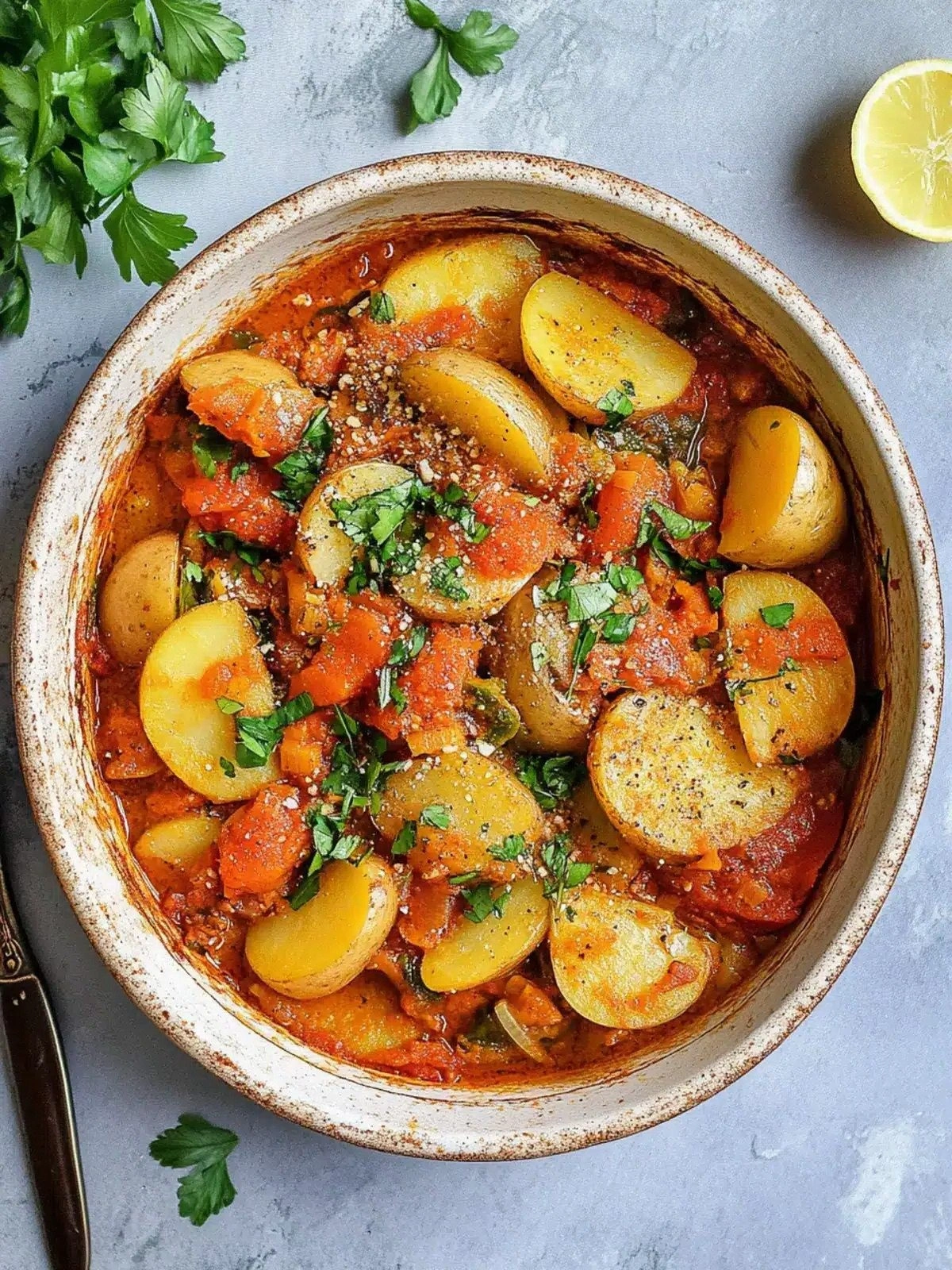
The Method — Step by Step
- Prep the vegetables: Peel the potatoes and carrots, then cut the potatoes into thick wedges and the carrot into thin rounds. Dice the onion finely and mince the garlic. If you’re short on time, you can use pre‑cut vegetables, but fresh cuts give a better texture.
- Sauté aromatics: Heat the olive oil in a heavy‑bottomed pot over medium heat. Add the onion and garlic, cooking until the onion is translucent and the garlic is fragrant. This step releases the base flavors that will build the sauce.
- Toast the spices: Sprinkle in the cumin, coriander, smoked paprika, and turmeric. Stir constantly for about 30 seconds until the spices become aromatic. The slight burning you might see is normal; it helps develop a deeper flavor.
- Add the potatoes and carrot: Toss the wedges and carrot rounds into the pot, coating them with the spice mixture. Cook for 4–5 minutes, allowing the edges to brown slightly. The caramelization adds a sweet, savory note that balances the spices.
- Introduce the chickpeas: Drain and rinse the canned chickpeas, then add them to the pot. Stir to combine, ensuring they’re evenly coated with the spiced vegetables.
- Deglaze and simmer: Pour in the vegetable broth, scraping up any browned bits from the bottom. Bring to a gentle boil, then reduce the heat to low. Cover and let it simmer for 20 minutes, allowing the flavors to meld and the potatoes to soften.
- Season and finish: Season with salt and black pepper to taste. Add the lemon wedges, allowing the citrus to steam in the pot for the last 5 minutes. The lemon adds a bright counterpoint to the smoky sauce.
- Finish with herbs: Remove the pot from heat. Sprinkle the chopped cilantro or parsley over the top, giving the dish a fresh, herbal lift. The herbs release their oils when warm, making the dish aromatic.
- Serve and enjoy: Ladle the tagine into bowls, ensuring each serving gets a good mix of potatoes, chickpeas, and sauce. Serve with a side of couscous, rice, or a crusty baguette. The dish is best enjoyed hot, as the steam brings out the full spectrum of flavors.
- Optional garnish: If you want extra texture, sprinkle some toasted almonds or pine nuts on top. They add a nutty crunch that contrasts the softness of the potatoes.
That's it — you did it. But hold on, I've got a few more tricks that'll take this to another level.
Insider Tricks for Flawless Results
The Temperature Rule Nobody Follows
Many cooks think a high simmer is always better, but a low, steady simmer preserves the integrity of the potatoes. Keep the heat at a gentle low so the vegetables cook evenly without breaking apart. If you’re using a pressure cooker, set it to low pressure for 5 minutes to mimic the slow, steady simmer.
Why Your Nose Knows Best
Smell the sauce as it cooks; a faint, sweet aroma indicates the spices are toasted to perfection. If the scent becomes bitter, it means the spices are burning. Adjust the heat accordingly and continue to stir.
The 5‑Minute Rest That Changes Everything
After removing the pot from heat, let the tagine rest for 5 minutes before serving. This allows the flavors to settle and the sauce to thicken slightly, giving the dish a richer mouthfeel.
Use Fresh Herbs, Not Dried
Fresh cilantro or parsley delivers a bright, clean flavor that dried herbs cannot match. If you must use dried, add it at the very end of cooking to preserve its delicate taste.
Serve With a Splash of Acid
A squeeze of fresh lemon or a splash of white wine vinegar right before serving brightens the dish and cuts through the richness. It also enhances the earthy spices.
Creative Twists and Variations
This recipe is a playground. Here are some of my favorite ways to switch things up:
Spicy Harissa Kick
Add a tablespoon of harissa paste to the sautéed aromatics for a fiery twist. The heat pairs beautifully with the smoky paprika, creating a layered spice profile that’s perfect for adventurous palates.
Sweet Potato & Lentil Fusion
Replace half the potatoes with sweet potatoes and swap the chickpeas for green lentils. The sweetness of the sweet potato balances the earthiness of the lentils, giving the dish a new depth.
Vegan Protein Boost
Add a handful of crumbled tofu or tempeh during the simmering stage. The protein absorbs the spices and adds a satisfying bite that keeps the dish hearty.
Crispy Chickpeas
Roast the chickpeas in the oven at 400°F for 15 minutes before adding them to the pot. The crunch adds an extra layer of texture that contrasts the soft potatoes.
Herb‑Infused Couscous Side
Cook couscous with a pinch of cumin and a splash of vegetable broth, then fold in chopped mint and parsley. Serve the tagine over the couscous for a complete, aromatic meal.
Breakfast Tagine
Serve the tagine with a side of poached eggs or a dollop of Greek yogurt. The richness of the sauce complements the protein, making it a satisfying breakfast or brunch.
Storing and Bringing It Back to Life
Fridge Storage
Cool the tagine completely before refrigerating. Store it in an airtight container for up to 4 days. The flavors will deepen, making it even more delicious the next day.
Freezer Friendly
Divide the tagine into freezer‑safe portions and freeze for up to 3 months. Thaw overnight in the refrigerator before reheating. The potatoes stay firm, and the sauce remains silky.
Best Reheating Method
Reheat the tagine on the stovetop over low heat, adding a splash of water or broth to prevent drying out. A quick stir will restore the sauce’s silky texture. Let it simmer for a few minutes until heated through.