Picture this: I’m standing in my kitchen, a pot of coffee brewing, and my nephew’s eyes wide as he asks for a chocolate treat that will make his Easter basket sparkle. I’m thinking, “Why not turn that wish into a party‑ready dessert?” The answer? A batch of Easter Egg Cupcakes that are so fluffy, so vibrant, and so irresistibly chocolate‑laden that even the most skeptical taste buds will surrender. I’ve been experimenting with flavors, textures, and a touch of whimsy for weeks, and I’m about to reveal the secret sauce that turns ordinary cupcakes into a springtime celebration.
The first time I tried this recipe, I almost burned the batter. The oven door was open, the timer was set, and I was distracted by the phone buzzing with memes. I knocked the mixing bowl over, sending flour flying like confetti. That chaotic moment taught me that precision matters—especially when you’re baking. The aroma that finally filled the kitchen—warm vanilla, toasted sugar, and a faint citrus tang—was a promise of the sensory adventure that awaited. If you’ve ever struggled to keep cupcakes from sticking to the pan or coming out too dense, you’re not alone. Trust me, I’ve been there.
What makes this version stand out is the meticulous balance between lightness and richness. The batter is airy, yet the chocolate eggs add a satisfying crunch that contrasts beautifully with the smooth buttercream. I dare you to taste this and not go back for seconds. The frosting is silky, not heavy, thanks to a splash of milk that keeps it from drying out. Every bite is a surprise: the first is a burst of chocolate, the second a hint of citrus, and the third a subtle nuttiness from the pistachios. By the end, you’ll wonder how you ever made cupcakes any other way.
Let me walk you through every single step—by the end, you’ll wonder how you ever made it any other way. I’ll share the little hacks that saved my batch, the timing tricks that keep the cupcakes moist, and the decorating tips that make them Instagram‑worthy. I’ll also throw in a few variations that let you customize the flavor profile for your guests. Ready? Let’s dive in.
What Makes This Version Stand Out
- Texture: The batter is light as a cloud but holds its shape, thanks to the precise ratio of flour to liquid and the gentle folding technique. The result is a cupcake that melts in your mouth without feeling heavy.
- Flavor: A subtle citrus zest lifts the sweetness, while the mini chocolate eggs add a chewy contrast that keeps every bite interesting.
- Decoration: The cocoa buttercream is glossy and smooth, giving the cupcakes a professional finish that’s still playful.
- Make‑ahead Friendly: The cupcakes can be baked a day early, chilled, and then frosted just before serving—perfect for busy hosts.
- Visual Appeal: The bright yellow batter, dark chocolate specks, and glossy eggs create a striking visual contrast that screams Easter.
- Ingredient Quality: Using real butter and fresh eggs elevates the flavor profile, making the cupcakes taste like they were made in a boutique bakery.
Alright, let’s break down exactly what goes into this masterpiece…
Inside the Ingredient List
The Flavor Base
The foundation of any great cupcake is a harmonious blend of dry and wet ingredients. All-purpose flour provides structure, while granulated sugar adds sweetness and caramelization. Unsalted butter, softened to room temperature, creates a tender crumb and a rich flavor that pairs beautifully with vanilla. Eggs act as the glue, binding everything together and contributing to the rise. Whole milk adds moisture, keeping the batter from becoming too dry.
The Texture Crew
Baking powder is the secret to a light rise; it reacts with the acidic elements in the batter to release CO₂. A pinch of salt balances the sweetness and enhances the overall flavor. The mini chocolate eggs are the star of the show—they provide a delightful crunch and a burst of chocolate that contrasts with the buttery frosting.
The Unexpected Star
Citrus zest is the unexpected twist that lifts the sweetness and adds a bright, fresh note. Fresh strawberries, chopped finely, can be folded into the batter for a pop of color and a subtle fruity flavor. Pistachios add a nutty crunch and a touch of elegance, making the cupcakes feel special.
The Final Flourish
The frosting is where the cupcakes truly shine. Powdered sugar gives the buttercream its smooth, glossy finish. Butter, melted, keeps the frosting silky. Milk adds moisture, preventing it from becoming too thick. Cocoa powder brings depth and richness, while vanilla enhances the overall flavor profile. A splash of lemon juice can brighten the frosting, cutting through the sweetness.
Everything’s prepped? Good. Let’s get into the real action…
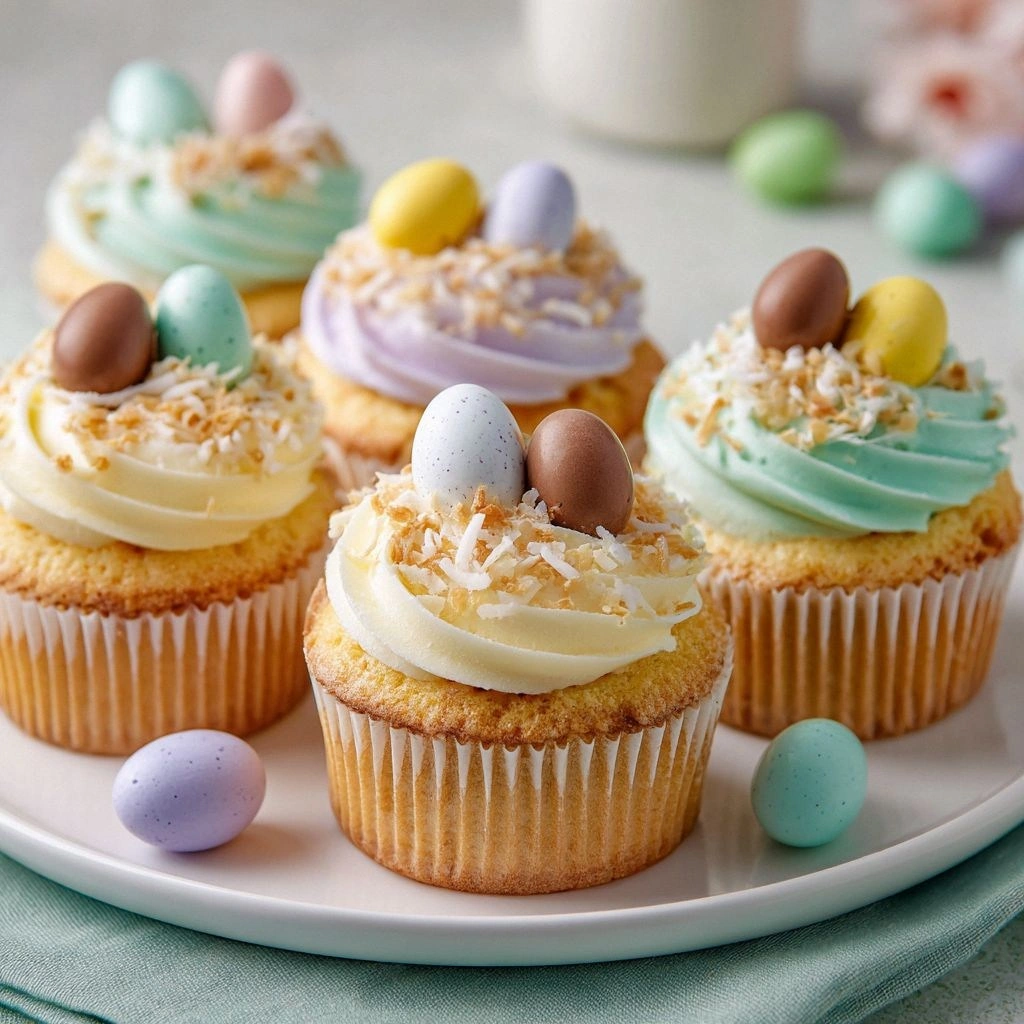
The Method — Step by Step
- Preheat your oven to 350°F (175°C) and line a 12‑cup muffin tin with paper liners. The heat should feel like a gentle, steady breeze. This step sets the foundation for even baking.
- In a large bowl, whisk together the flour, baking powder, and salt. Sift them together to ensure a smooth batter and to avoid any lumps.
- In a separate bowl, beat the butter and sugar until the mixture is pale and fluffy. This process incorporates air, giving the cupcakes their airy texture.
- Add the eggs one at a time, beating well after each addition. The batter will thicken slightly, but that’s a good sign of a solid structure.
- Stir in the vanilla and citrus zest, then fold in the milk until just combined. The batter should be thick but pourable; if it’s too thick, add a splash more milk.
- Gently fold in the mini chocolate eggs, ensuring they’re evenly distributed. The batter should still hold its shape when you spoon it into the liners.
- Fill each paper liner about 3/4 full. Bake for 18–20 minutes, or until a toothpick inserted into the center comes out clean. The cupcakes should be golden on the edges and slightly firm to the touch.
- Let the cupcakes cool in the tin for 5 minutes, then transfer them to a wire rack to cool completely. This step prevents condensation from making the frosting soggy.
- While the cupcakes cool, prepare the frosting: beat the butter until creamy, add powdered sugar and cocoa powder gradually, then fold in milk and vanilla until you reach a spreadable consistency. The frosting should be smooth and glossy.
- Once cooled, pipe the frosting onto each cupcake with a piping bag fitted with a star tip. Decorate with extra mini chocolate eggs or a dusting of cocoa powder for an extra flourish.
- Serve immediately or refrigerate in an airtight container for up to 3 days. For a fresh look, let them sit at room temperature for 30 minutes before serving.
That’s it — you did it. But hold on, I’ve got a few more tricks that will take this to another level…
Insider Tricks for Flawless Results
The Temperature Rule Nobody Follows
Many bakers bake cupcakes at 375°F, assuming a higher temperature gives a crisper top. I’ve found that 350°F keeps the cupcakes moist and ensures a uniform rise. If you’re using a convection oven, lower the temperature by 25°F to avoid over‑browning.
Why Your Nose Knows Best
When the cupcakes are baking, you’ll notice a sweet, buttery aroma. That scent is a signal that the batter is cooking evenly. If the smell is too caramelized, the oven may be too hot; if it’s barely noticeable, the cupcakes need a bit more time.
The 5‑Minute Rest That Changes Everything
After removing the cupcakes from the oven, let them rest in the tin for exactly 5 minutes. This brief pause allows the cupcakes to finish cooking from residual heat, preventing a soggy crumb.
The Mini Chocolate Egg Placement
When folding in the mini chocolate eggs, use a gentle motion to keep them from breaking. If you prefer a more uniform distribution, line up the eggs on a sheet of parchment before folding them into the batter.
The Frosting Consistency Hack
If your frosting feels too thick, add a tablespoon of milk; if it’s too thin, add a tablespoon of powdered sugar. The goal is a frosting that spreads easily but doesn’t run.
Creative Twists and Variations
This recipe is a playground. Here are some of my favorite ways to switch things up:
Lavender‑Infused Cupcakes
Add a teaspoon of dried culinary lavender to the dry mix for a floral hint that pairs well with the chocolate. The lavender gives the cupcakes a subtle, aromatic twist.
Chocolate‑Mint Surprise
Replace the vanilla with peppermint extract and fold in crushed mint chocolate chips. The mint brings a refreshing contrast to the rich chocolate.
Almond‑Honey Delight
Swap the all-purpose flour for almond flour and replace the granulated sugar with honey. The result is a nutty, slightly sweet cupcake that’s gluten‑free.
Citrus‑Orange Burst
Add orange zest and a splash of orange juice to the batter. The bright citrus flavor elevates the chocolate and adds a fresh aroma.
Caramel‑Swirl Variation
Swirl caramel sauce into the batter before baking. The caramel adds a sweet, buttery layer that complements the chocolate eggs.
Pistachio‑Chocolate Fusion
Fold in chopped pistachios and replace the mini chocolate eggs with mini chocolate pistachio chips. The nutty crunch adds a new dimension to the texture.
Storing and Bringing It Back to Life
Fridge Storage
Store frosted cupcakes in an airtight container at room temperature for up to 3 days. The frosting stays firm, and the cupcakes remain moist. If you’re storing unfrosted cupcakes, keep them in a paper bag to prevent moisture buildup.
Freezer Friendly
Freeze cupcakes without frosting in a single layer on a baking sheet, then transfer to a freezer bag. They’ll keep for up to 2 months. Thaw at room temperature for 30 minutes before frosting.
Best Reheating Method
To revive frozen or refrigerated cupcakes, warm them in a preheated oven at 300°F (150°C) for 5 minutes. Add a tiny splash of water to the bottom of the pan; the steam will keep the cupcakes from drying out.