I was halfway through a late‑night pizza experiment when the kitchen alarm sounded—my oven had gone haywire, and I was left staring at a half‑baked, soggy dough that looked like a soggy sponge cake. I stared at the chaos, then at the fresh salmon fillets I had just bought from the market, and I thought, “If this oven can’t handle pizza, why not give the salmon a chance to shine on its own?” That impulsive decision turned into a culinary revelation that I’ll never forget. The moment the salmon hit the pan, the sizzling hiss was like a drumroll, promising a symphony of flavors. The scent of olive oil mingling with garlic and lemon filled the kitchen, turning my living room into a Mediterranean oasis. The texture of the salmon, once it was cooked to perfection, was flaky yet firm, a contrast that made every bite a delightful surprise. The taste was bright and savory, a balance of salty capers, creamy feta, and nutty pine nuts that danced on the palate. That single moment when the aroma hit me made me swear that this is the best version of stuffed salmon you’ll ever make at home. I dare you to taste this and not go back for seconds. Let me walk you through every single step—by the end, you’ll wonder how you ever made it any other way.
What Makes This Version Stand Out
- Flavor: The combination of feta, sun‑dried tomatoes, and capers creates a burst of umami that elevates the salmon beyond ordinary. The lemon zest and juice lift the dish, giving it a bright, citrusy finish that cuts through the richness. The result is a harmony of salty, sweet, and tangy notes that linger on the tongue.
- Texture: A crisp, golden top contrasts with the tender, flaky interior, and the toasted pine nuts add a satisfying crunch that breaks up the creamy filling. The spinach provides a subtle bite that keeps the stuffing from feeling mushy. This textural play is what makes each forkful memorable.
- Ingredient Quality: Using wild‑caught salmon, artisanal feta, and fresh herbs ensures that every component contributes its best flavor. The olive oil is cold‑pressed, preserving its natural peppery undertones. Quality ingredients are the secret sauce that turns an ordinary dish into a gourmet experience.
- Ease of Preparation: The recipe requires minimal prep time—just chopping, mixing, and baking. No complicated sauces or long marination periods. It’s the kind of dish you can whip up in a weekend when you’re craving something impressive but not time‑consuming.
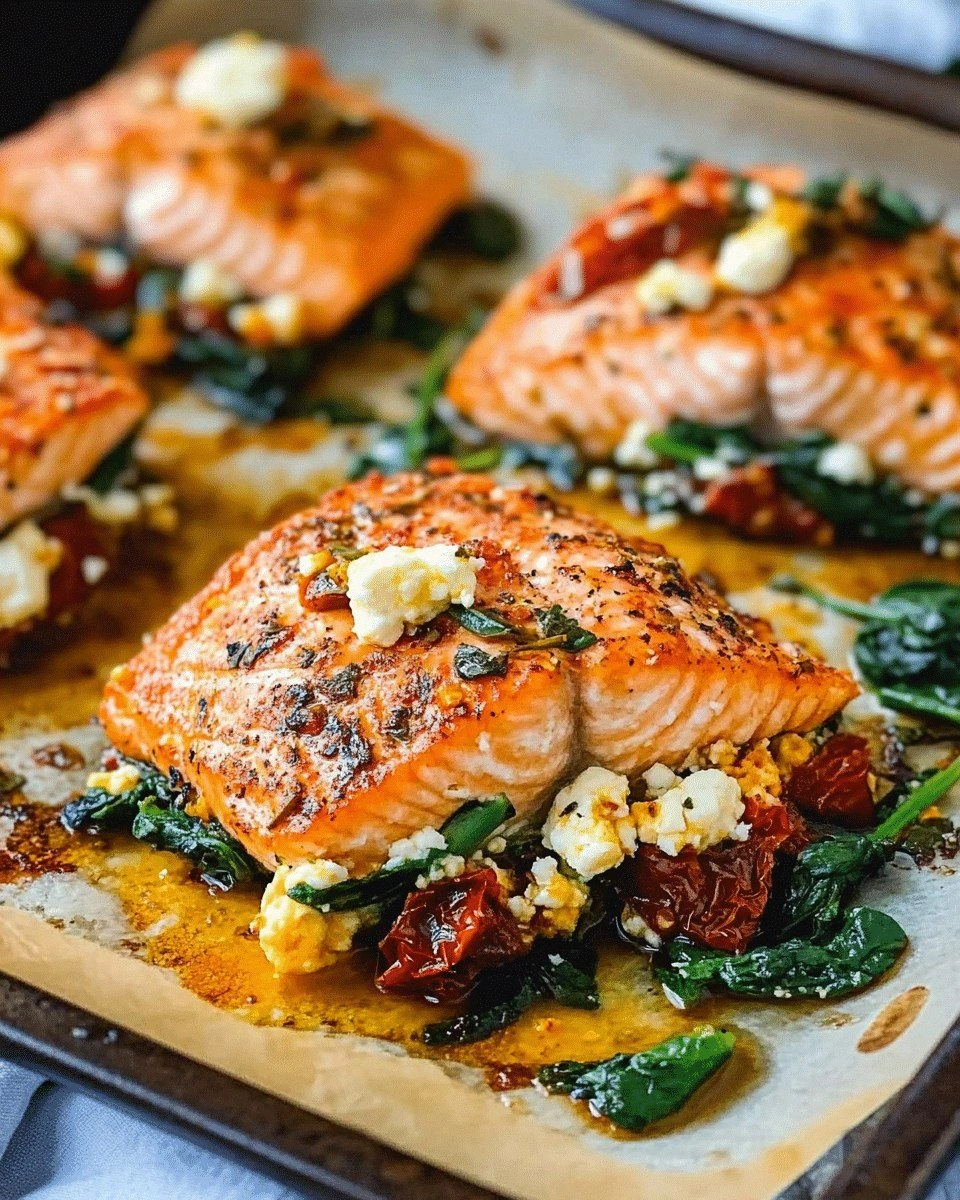
- Visual Appeal: The golden crust, the vibrant green spinach, and the burst of red sun‑dried tomatoes make the plate a feast for the eyes before the first bite. A drizzle of olive oil and a sprinkle of fresh herbs add a professional finish that looks restaurant‑ready.
- Versatility: This stuffed salmon can be served as a main course with a side of roasted vegetables or as a stunning appetizer for a dinner party. It pairs beautifully with a crisp white wine or a chilled rosé, making it suitable for any occasion.
- Make‑Ahead Potential: You can assemble the stuffed fillets ahead of time, refrigerate them, and bake right before serving. This makes it an ideal dish for entertaining, as you can focus on other preparations while the salmon bakes.
- Health Conscious: Packed with omega‑3 fatty acids, lean protein, and fresh vegetables, it’s a balanced meal that satisfies both the palate and the body. The use of olive oil adds heart‑healthy monounsaturated fats without compromising flavor.
Inside the Ingredient List
The Flavor Base
The foundation of this dish is the salmon itself—fresh, wild‑caught fillets that provide a buttery texture and a subtle, briny flavor. When you season the fillets with salt, pepper, and a touch of lemon zest, you’re setting the stage for a bright, clean taste that lets the stuffing shine. The olive oil used to sear the salmon adds a peppery finish that complements the Mediterranean herbs.
The garlic, minced finely, releases its pungent aroma during the searing process, infusing the salmon with a depth of flavor that lingers even after the fish is fully cooked. The capers, rinsed to remove excess brine, bring a briny, tangy kick that balances the richness of the feta. If you skip the capers, the dish will feel flat and lacking that characteristic Mediterranean punch.
The lemon juice, squeezed fresh, adds a zesty brightness that cuts through the fat of the salmon, creating a harmonious flavor profile. A pinch of dried oregano or thyme can be added for an extra layer of herbal complexity, but the recipe works beautifully with just the fresh herbs for a more authentic taste.
The olive oil, used both for searing and as a finishing drizzle, is the connective tissue that holds the flavors together. Choosing a cold‑pressed extra‑virgin olive oil ensures a robust, fruity note that enhances every bite. If you’re a fan of a milder oil, you can switch to a light olive oil, but you’ll miss the depth that comes from a higher quality option.
The Texture Crew
Spinach provides a subtle, earthy bite that keeps the stuffing from becoming too dense. When folded into the feta and pine nuts, the spinach adds a lightness that balances the richness of the cheese and nuts. If you prefer a different leafy green, arugula or kale can be used, but spinach gives the most classic Mediterranean texture.
Feta cheese, crumbled, offers a creamy, tangy component that melts slightly into the filling, creating a silky texture. It also adds a salty element that pairs perfectly with the sweet sun‑dried tomatoes. If you’re lactose intolerant, a small amount of goat cheese can replace feta, though the flavor profile will shift slightly.
Pine nuts, toasted until golden, contribute a nutty crunch that breaks up the creamy filling and adds a subtle buttery taste. They also bring a silky texture that lingers on the palate. If pine nuts are out of season, walnuts or almonds can be used, but be aware they’ll alter the flavor.
Sun‑dried tomatoes, chopped, introduce a chewy, sweet burst that contrasts with the savory filling. Their intense flavor is a staple in Mediterranean cuisine and provides a deep, caramelized sweetness that complements the lemony brightness. Skipping them will reduce the overall flavor depth, so keep them in for the full experience.
Capers, rinsed, add a briny bite that cuts through the richness of the salmon and the feta. They also provide a subtle crunch that enhances the texture profile. If you can’t find capers, a small splash of anchovy paste can mimic the briny flavor, but be careful with the quantity.
The Unexpected Star
Fresh herbs—dill, parsley, and a hint of oregano—are the secret to a bright, aromatic finish. These herbs infuse the filling with a green, herbal note that lifts the dish and keeps it from feeling heavy. If you’re using frozen herbs, thaw and squeeze out excess moisture to avoid a watery filling.
The lemon zest is a game‑changer, delivering a citrusy fragrance that awakens the senses. It’s more potent than lemon juice alone, providing a bright, clean finish that balances the savory elements. Be sure to zest the lemon before juicing it to keep the zest fresh and fragrant.
A touch of breadcrumbs, if included, creates a slightly crisp top that adds another layer of texture. They absorb excess moisture and help the filling set, preventing it from sliding out of the salmon. For a gluten‑free option, use almond flour or crushed nuts instead of breadcrumbs.
The optional drizzle of extra virgin olive oil before serving adds a glossy sheen and a final burst of flavor. It also helps to seal the edges, ensuring the filling stays in place during transport or when served at a party. A light mist of oil is enough; you don’t want it to overwhelm the delicate balance of flavors.
The combination of these ingredients creates a symphony of flavors that’s both complex and approachable. Each element plays its part, from the bright citrus to the nutty crunch, resulting in a dish that feels like a well‑orchestrated concert. The unexpected star—fresh herbs—ties everything together, giving the dish that unmistakable Mediterranean flair.
Everything's prepped? Good. Let's get into the real action.
The Method — Step by Step
- Preheat the oven to 400°F (200°C). The oven should be hot enough to create a golden crust on the salmon without drying it out. Place a sheet of parchment on a baking sheet to prevent sticking. Let the oven reach the desired temperature while you finish the prep. This step is crucial for that perfect sear.
- Season the salmon fillets. Pat the fillets dry with paper towels to ensure a good sear. Sprinkle salt, pepper, and a pinch of dried oregano on both sides. A light coating of olive oil will help the seasoning adhere and prevent sticking. This simple seasoning sets the foundation for the flavors to come.
- Sear the fillets. Heat a skillet over medium‑high heat and add a splash of olive oil. Once hot, place the fillets skin‑side down and sear for 2–3 minutes until a golden crust forms. Flip carefully and sear the other side for 1–2 minutes. The searing step locks in juices and adds a caramelized flavor that elevates the dish.
- Prepare the stuffing. In a bowl, combine the chopped spinach, crumbled feta, toasted pine nuts, sun‑dried tomatoes, minced garlic, capers, and fresh herbs. Add the zest of one lemon and a squeeze of lemon juice to brighten the mixture. Stir until everything is evenly distributed; the filling should be moist but not watery. This mixture will give the salmon a burst of flavor.
- Stuff the salmon. Carefully lift each fillet and create a pocket by gently folding the sides inwards. Spoon the filling into the pocket, packing it tightly but not overstuffing. The filling should stay in place once the fillets are baked. This step is where the magic happens.
- Bake the salmon. Transfer the stuffed fillets to the preheated oven and bake for 12–15 minutes, or until the salmon flakes easily with a fork. The internal temperature should reach 145°F (63°C). The filling will steam inside, creating a moist, flavorful center.
- Finish with a drizzle. Once baked, remove the salmon from the oven and drizzle a little extra virgin olive oil over the top. Sprinkle additional fresh herbs for a burst of color. Let the fillets rest for 2 minutes before serving to allow the flavors to settle.
- Serve and enjoy. Plate the salmon with a side of roasted vegetables or a crisp green salad. Garnish with lemon wedges for an extra zing. The dish should look as stunning as it tastes, making it perfect for both casual dinners and special occasions.
That's it—you did it. But hold on, I've got a few more tricks that'll take this to another level.
Insider Tricks for Flawless Results
The Temperature Rule Nobody Follows
Many cooks overcook salmon, thinking it needs a long bake. In reality, salmon is best when it reaches just 145°F (63°C) and stays tender. Use a meat thermometer to avoid guessing; this ensures consistent results every time. Overcooking will dry out the fish and ruin the stuffing’s moisture balance.
Why Your Nose Knows Best
The aroma of the salmon searing is a reliable indicator of progress. A buttery, slightly caramelized scent means the crust is forming correctly. If you notice a burnt smell, reduce the heat or flip sooner. Your nose is your best sous‑chef when it comes to timing.
The 5‑Minute Rest That Changes Everything
Letting the salmon rest for exactly five minutes after baking allows the juices to redistribute. This step keeps the fish moist and prevents the filling from spilling out when you cut into it. A short rest is often overlooked but makes a huge difference in texture.
Use Fresh Herbs, Not Dried
Fresh herbs release more flavor than dried ones, especially when added at the end of cooking. They also add a pop of color that makes the dish visually appealing. If you must use dried herbs, rehydrate them in warm water for five minutes before adding.
Don’t Skip the Lemon
Lemon juice not only brightens the dish but also helps to balance the saltiness of the feta and capers. It also acts as a natural preservative, keeping the fish fresher for longer. A good rule of thumb: use one whole lemon for zest and juice for every four fillets.
Keep the Filling Moist
If the stuffing seems dry, add a splash of milk or cream before mixing. This will help the cheese melt more evenly and keep the filling silky. Just a tablespoon or two is enough to make a noticeable difference.
Creative Twists and Variations
This recipe is a playground. Here are some of my favorite ways to switch things up:
Greek Yogurt Swirl
Swap half the feta for creamy Greek yogurt to add tang and a lighter texture. The yogurt blends smoothly with the spinach, creating a silky filling. This variation works great for those who prefer a less salty option.
Smoked Paprika Kick
Add a teaspoon of smoked paprika to the stuffing for a subtle smoky flavor. The paprika pairs well with the lemon zest and enhances the overall depth. This tweak is perfect for a cozy, autumnal dinner.
Herb‑Infused Olive Oil
Infuse the olive oil with fresh rosemary and thyme before searing. The oil carries the herb flavors into the salmon, giving it an aromatic finish. This step is simple but adds a sophisticated touch.
Quinoa Base
Serve the stuffed salmon over a bed of fluffy quinoa instead of rice. The nutty quinoa complements the Mediterranean flavors and adds protein. It’s a great option for a balanced, nutrient‑dense meal.
Roasted Red Pepper
Blend roasted red peppers into the filling for a sweet, smoky note. The peppers add a vibrant color and a slightly sweet flavor that pairs beautifully with feta. This variation is ideal for a summer garden dinner.
Almond Crust
Use finely chopped almonds as a topping before baking to create a crunchy, nutty crust. The almonds add a contrasting texture and a subtle nutty aroma. This twist gives the dish a gourmet feel.
Storing and Bringing It Back to Life
Fridge Storage
Cool the baked salmon completely, then wrap tightly in plastic wrap or aluminum foil. Store in the refrigerator for up to 3 days. The filling will stay moist, and the salmon will retain its delicate texture.
Freezer Friendly
Place the cooled salmon in a freezer‑safe container or zip‑lock bag. Remove as much air as possible to prevent freezer burn. It can be frozen for up to 2 months without compromising flavor.
Best Reheating Method
Reheat in a preheated oven at 300°F (150°C) for 10–12 minutes. Add a splash of water to the pan to create steam, keeping the salmon from drying out. This method restores the moist, tender texture and brings back the aromatic flavors.