I'll be honest with you — I completely ruined my first attempt at pink sourdough bread. There I was, standing in my kitchen at 2 AM, covered in flour and what looked like a crime scene from a strawberry milk explosion. My roommate walked in, took one look at the Pepto-Bismal colored dough stuck to my ceiling, and asked if I was starting a new modern art project. Nope, just your average Tuesday night sourdough experiment gone horribly, hilariously wrong.
But here's the thing about spectacular failures in the kitchen — they teach you more than any cookbook ever could. That neon monstrosity taught me that dragon fruit powder is a fickle mistress, that timing matters more than Instagram makes it seem, and that sometimes the most beautiful things come from the messiest disasters. Fast forward through three months of obsessive testing, and I'm now the proud creator of what I genuinely believe is the most stunning sourdough you'll ever pull from your oven.
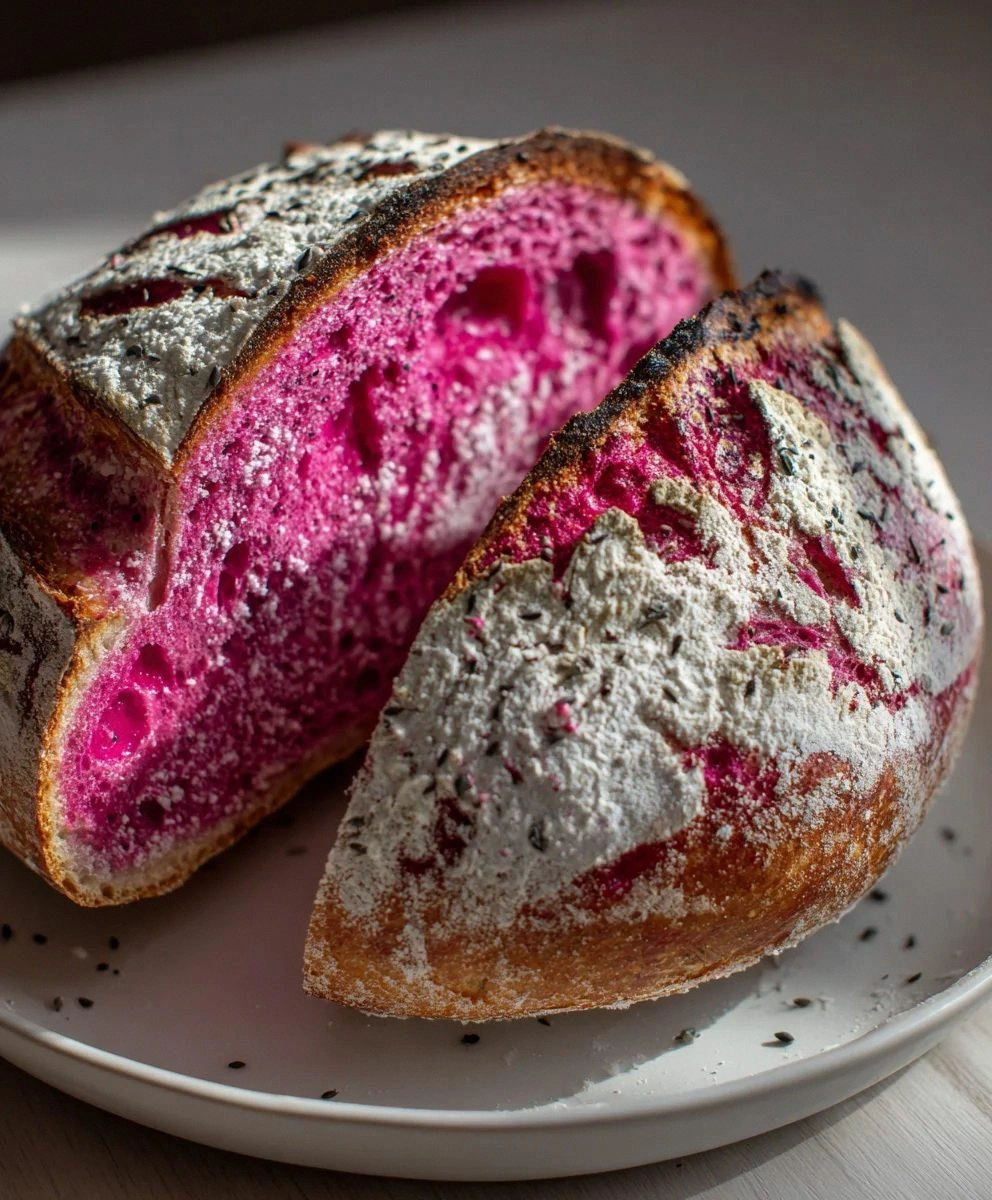
Picture this: You open your Dutch oven to reveal a loaf that's not just bread — it's a sunset captured in crust form. The outside blushes like a perfect peach, while the inside reveals swirls of rose and cream that make people stop mid-sentence when you slice into it. The flavor? Oh, the flavor is where things get dangerous. There's that familiar tangy sourdough bite, but it's wrapped in the faintest whisper of tropical sweetness that makes you close your eyes and wonder if you're actually tasting colors. I dare you to make this once and not find yourself planning your entire week around feeding your starter just right.
What started as a desperate attempt to impress my Instagram followers has become my signature bake, the one friends request for birthdays and dinner parties. The magic isn't just in the color — though let's be real, that pink hue is social media gold — it's in the way this bread makes people feel. It's impossible to stay grumpy when you're tearing into a loaf that looks like it was baked by unicorns. Stay with me here — this is worth every single minute of the journey we're about to take together.
What Makes This Version Stand Out
The Color That Actually Lasts: Most pink breads fade faster than your summer tan, but this beauty holds its rosy glow for days. The dragon fruit powder creates a stable pigment that deepens slightly as it ferments, giving you that perfect blush that makes everyone ask "Wait, is that naturally colored?" I've had loaves stay vibrantly pink for a full week, getting more compliments on day three than day one.
Flavor That Sneaks Up On You: Here's what nobody tells you about dragon fruit — it's not just about the color. This superfruit adds the most subtle tropical note that plays hide-and-seek with your taste buds. First bite, you get that classic sourdough tang. Second bite, there's something else, something that reminds you of lazy summer afternoons. By the third bite, you're completely hooked and can't quite figure out why this tastes so much more interesting than your usual sourdough.
Starter-Friendly Formula: If you've ever struggled with sourdough timing, this recipe is about to become your new best friend. The dragon fruit powder actually gives visual cues about your fermentation progress — the color intensifies as the wild yeasts get to work, so you can literally see when your dough is ready. No more guessing games or poking dough like you're trying to read tea leaves.
Instagram Gold Without the Filter: Let's not pretend we don't care about how our food looks — we absolutely do, and there's no shame in that game. This bread photographs like a dream, catching light in ways that make professional food bloggers weep with envy. But unlike those neon food-colored monstrosities, this color comes from actual fruit, so you can virtue-signal while you brag about your baking skills.
The Texture Game-Changer: Dragon fruit powder doesn't just bring the party to your eyes — it subtly affects the protein structure in ways that create the most incredibly tender crumb. We're talking about a bread that manages to be both airy and satisfyingly chewy, with those irregular holes that sourdough enthusiasts get positively religious about. Your sandwiches will never be the same.
Make-Ahead Magic: Here's my favorite part — this dough actually improves with an overnight rest in the fridge. The color develops more depth, the flavors marry and mature, and you can bake it fresh for weekend brunch without the 4 AM wake-up call. I've kept this dough refrigerated for up to three days before baking, and each day it just gets better, like some kind of magical Benjamin Button bread.
Alright, let's break down exactly what goes into this masterpiece. The ingredient list is shorter than most sourdough recipes, but each component pulls serious weight. We're working with the baking equivalent of a dream team here — every player has a specific role, and when they work together, it's pure harmony.
Inside the Ingredient List
The Foundation Crew
Bread flour is the backbone of this operation, and I'm not just being dramatic here. You need that high protein content — we're talking 12-13% minimum — to create the gluten structure that'll support all those gorgeous air pockets. All-purpose flour will work in a pinch, but you'll end up with a denser loaf that doesn't have that satisfying chew. Think of it like the difference between a store-bought tomato and one that's been kissed by the summer sun — technically the same thing, but experientially worlds apart.
Your sourdough starter needs to be at peak activity for this recipe, which means it's doubled in size, filled with bubbles, and passes the float test like a champion. If your starter is sluggish, the dragon fruit powder can actually give it a little boost — the natural sugars provide extra food for your wild yeasts. I've noticed my pink loaves tend to ferment slightly faster than my regular ones, so keep an eye on timing during bulk fermentation.
The Color Magician
Dragon fruit powder is the Beyoncé of this ingredient list — it demands attention and delivers every single time. But here's what most recipes get wrong: they add it all at once during mixing, which gives you flat, one-note color. The real magic happens when you reserve some powder for the lamination fold, creating those beautiful marbled effects that make people think you're some kind of bread artist. You can find dragon fruit powder online or in health food stores, but check the ingredients list — you want 100% pure powder, not a blend with fillers that'll dull your color.
The amount might seem tiny, but dragon fruit powder is concentrated power. Two teaspoons create a soft blush, while three give you that Instagram-worthy vibrant pink. Four teaspoons? Congratulations, you've just created bread that glows in blacklight. I've experimented with every quantity imaginable, and I've found that 2.5 teaspoons hits the sweet spot between subtle and statement-making.
The Flavor Enhancers
Salt does way more than make things taste salty — it's the conductor of this flavor orchestra, bringing out the subtle sweetness of the dragon fruit while taming any harsh sour notes from your starter. I use fine sea salt because it dissolves quickly and evenly, but kosher salt works if you give it a few extra minutes to incorporate. The timing of when you add salt matters too much to skip — add it after the initial mix, during what bakers call the "lamination" stage.
Water quality affects your final product more than most people realize. If your tap water tastes like a swimming pool, your bread will too. I use filtered water that's been sitting out overnight — this lets any chlorine dissipate and brings the water to room temperature. Lukewarm water (around 75°F) is your target; too hot and you'll murder your precious starter, too cold and your fermentation moves at glacial speed.
The Unexpected Game-Changers
Here's where I get a little controversial — I add a teaspoon of honey to my pink sourdough. Not for sweetness, but because the natural enzymes help break down the dragon fruit's cell walls, releasing more color and creating this gorgeous depth of flavor. It's like the difference between flat paint and paint with primer — the honey helps everything adhere and intensify. Your bread won't taste like honey, but it'll have this round, complete flavor that makes people ask for your secret.
Everything's prepped? Good. Let's get into the real action — and trust me, this is where the magic happens. If you've ever watched those satisfying bread videos and thought "I could never make something that beautiful," prepare to surprise yourself. We're about to turn your kitchen into the set of your own personal baking show.
The Method — Step by Step
Start by feeding your starter 6-8 hours before you plan to mix your dough — you want it at its peak, like a teenager who's just discovered coffee. Combine 50g of your active starter with 100g of bread flour and 100g of lukewarm water in a clean jar, stirring until no dry bits remain. Cover loosely and let it party at room temperature until it's doubled and passes the float test. This is where most people rush — don't. A sluggish starter means dense bread, and all the dragon fruit powder in the world can't save over-proofed dough.
When your starter is ready, it's time for the autolyse — which sounds fancy but is really just letting flour and water get acquainted before adding the salt. Mix 500g bread flour with 350g lukewarm water in a large bowl until just combined. Cover and let it rest for 30 minutes while you prep everything else. This step hydrates the flour and starts gluten development, giving you that gorgeous stretchy dough that'll make your arms feel like you've been doing yoga. The dragon fruit powder gets added later — adding it now can interfere with gluten formation, and we want strong, beautiful strands that'll trap all those fermentation gases.
Now for the fun part — adding your starter and beginning the mix. Sprinkle 100g of your bubbly starter over the autolyse mixture, then use wet hands to gently incorporate it using the pinch and fold method. Think of it like giving your dough a gentle massage rather than kneading bread like you're angry at it. The dough will feel sticky and shaggy at first, but resist the urge to add more flour — this is exactly what we want. Cover and let it rest for 30 minutes while the starter gets to work on those freshly hydrated flour particles.
Time to add the salt and dragon fruit powder — but here's the twist that changes everything. Instead of mixing them in directly, dissolve 10g of salt in 20g of warm water first. For the dragon fruit powder, reserve 1 teaspoon for later and mix the remaining amount with a tablespoon of water to create a smooth paste. This prevents those dreaded powder pockets that give you bitter surprises. Add both mixtures to your dough and incorporate using the stretch and fold technique, working gently but thoroughly. The dough will immediately take on a pale pink hue that'll make you grin like a kid with a new box of crayons.
Bulk fermentation is where the real magic happens, and this is where most home bakers lose their nerve. Your dough needs 4-6 hours at room temperature, but here's the key — forget the clock and watch the dough. Every 30 minutes during the first two hours, perform a set of stretch and folds. Grab one side of the dough, stretch it up (it should stretch without tearing), and fold it over itself. Rotate the bowl a quarter turn and repeat three more times. By the third set, you'll notice the dough becoming smoother, stronger, and more elastic. The color will deepen slightly too — that's the dragon fruit working its mysterious magic.
Here's where we get artistic with that reserved dragon fruit powder. After your last set of stretch and folds, it's time for the lamination fold — which sounds complicated but is really just stretching your dough thin enough to see light through, then folding it like a letter. Before you fold it back up, sprinkle that reserved teaspoon of dragon fruit powder over half the surface. When you fold it, you'll create beautiful marbled effects that look like pink lightning bolts through your crumb. Don't worry about being perfect — irregular patterns look more natural and interesting anyway.
Shape your dough with confidence, even if you're faking it. Gently turn your fermented dough onto a lightly floured surface, being careful not to deflate all those precious bubbles you've worked so hard to create. Use a bench scraper to pre-shape into a loose round, then let it rest for 20 minutes while the gluten relaxes. For the final shape, flip it over and create surface tension by pulling the dough toward you while rotating. The goal is a taut outer skin that'll give you that gorgeous ear when it bakes. Place it seam-side up in a well-floured banneton or a bowl lined with a floured tea towel.
Cold fermentation is your secret weapon for developing both flavor and that stunning color contrast. Cover your shaped dough and refrigerate for 12-48 hours — yes, you can wait that long. The cold slows fermentation to a crawl, allowing enzymes to break down starches and create more complex flavors. The dragon fruit color actually intensifies during this rest, developing deeper, more sophisticated tones. I've baked loaves after 24 hours, 36 hours, and 48 hours, and the 36-hour mark hits the sweet spot of flavor development without the dough becoming too acidic.
Preheating your Dutch oven is non-negotiable for that professional bakery crust. Place your Dutch oven with lid on in your oven and heat to 475°F for at least 45 minutes. This creates the steamy environment that allows your bread to expand before the crust sets — it's like giving your loaf a spa treatment before its final transformation. When you're ready to bake, carefully remove the hot Dutch oven, turn your chilled dough onto parchment paper, score it with confident slashes, and lower it in. The contrast between cold dough and hot oven creates explosive oven spring, giving you that impressive rise that makes you feel like a bread wizard.
The final bake requires patience and trust — two qualities that don't come naturally to me, but this bread has taught me. Bake covered for 20 minutes, then remove the lid and bake another 25-30 minutes until the crust is deep mahogany and the internal temperature reaches 210°F. Your kitchen will smell like a tropical bakery had a baby with a French patisserie, and you'll find yourself hovering by the oven like it contains the secrets of the universe. Cool completely on a wire rack for at least 2 hours — I know, I know, but cutting into hot sourdough is like opening your presents before Christmas morning. The wait is torture, but the reward is worth every agonizing minute.
That's it — you did it. But hold on, I've got a few more tricks that'll take this to another level. These are the insider secrets that separate the good bakers from the ones whose bread people talk about for years. Ready for the game-changer advice that'll make you the sourdough hero of your friend group?
Insider Tricks for Flawless Results
The Temperature Rule Nobody Follows
Here's the thing that'll make or break your pink sourdough — dough temperature matters more than room temperature. Your dough should stay between 75-78°F throughout bulk fermentation, which means adjusting your water temperature based on your kitchen's mood swings. In summer, I use ice-cold water. In winter, I warm it slightly. Buy an instant-read thermometer and become obsessed with dough temp — your bread will reward you with consistent results that make you look like a baking genius even when you're just following numbers.
Why Your Nose Knows Best
Stop relying on timers and start trusting your sense of smell. When your dough is properly fermented, it smells like sweet apples with a hint of tang, not like beer or vinegar. During bulk fermentation, take a whiff every hour — when it changes from raw flour smell to fruity complexity, you're getting close. This works especially well with pink sourdough because the dragon fruit adds its own aromatic dimension. A friend tried skipping this step once — let's just say her bread smelled like a frat party and tasted about as good.
The 5-Minute Rest That Changes Everything
After your final shape, give your dough a 5-minute bench rest before placing it in the banneton. This short relaxation period allows the gluten to adjust to its new tension, preventing those annoying blowouts during baking. It's like giving your dough a tiny meditation break before its final transformation. I discovered this by accident when my phone rang mid-shape, and those five unintended minutes resulted in my best-looking loaf to date. Sometimes the best discoveries happen when life interrupts our perfectionism.
The Scoring Secret for Maximum Drama
Score your pink sourdough with confidence — hesitant slashes create ragged edges that look amateur. Use a sharp razor blade held at a 45-degree angle, and make one continuous cut rather than multiple short ones. The dragon fruit powder creates a stunning contrast when the loaf expands, revealing deeper pink against the crust's toasted exterior. Practice your scoring pattern on a piece of cardboard first — muscle memory matters when you're working with 475°F ovens and precious dough that's been 36 hours in the making.
The Storage Trick That Preserves Perfection
Store your completely cooled pink sourdough cut-side down on a wooden cutting board — never plastic, which traps moisture and makes the crust soggy. The cut surface forms a natural seal that keeps the interior fresh while maintaining that crackly crust. Wrap the whole thing in a clean tea towel if you need to, but avoid plastic bags unless you want to ruin that gorgeous texture you worked so hard to achieve. Your bread will stay fresh for up to four days this way, though honestly, mine never lasts more than two because people keep "dropping by" when they hear I'm baking.
Creative Twists and Variations
This recipe is a playground. Here are some of my favorite ways to switch things up:
The Sunset Swirl
Add 2 tablespoons of dried hibiscus flowers to your water during the autolyse stage, then strain before mixing. The hibiscus adds layers of pink and red that create stunning color gradients through your crumb. The floral notes play beautifully with the dragon fruit's tropical character, resulting in a bread that tastes like vacation feels. This version pairs ridiculously well with honey and butter, or use it for the most sophisticated PB&J of your life.
The Chocolate Marble
For a dramatic twist, reserve 1/3 of your dough and mix in 2 tablespoons of cocoa powder before the lamination fold. The pink and brown swirls create a neopolitan effect that's absolutely stunning when sliced. Kids go crazy for this version, and it makes the most incredible French toast you've ever tasted. The chocolate adds richness without overwhelming the subtle dragon fruit flavor.
The Seeded Beauty
h3>Add 1/4 cup each of pumpkin seeds and sunflower seeds during the second set of stretch and folds. The seeds add crunch and nutrition while creating gorgeous visual contrast against the pink crumb. Toast the seeds lightly first for maximum flavor impact. This version makes incredible sandwiches — the seeds add texture that elevates everything from turkey to tomato and mayo.
The Savory Surprise
Replace the honey with 2 tablespoons of olive oil and add 2 teaspoons of dried rosemary with the salt. The herbaceous notes create this incredible savory-sweet balance that makes people ask "What am I tasting?" It's perfect for serving alongside soup or using for grilled cheese. The pink color makes it feel special occasion, while the savory notes make it incredibly versatile.
The Breakfast Champion
Add 1/4 cup dried cranberries and 2 tablespoons orange zest during the lamination fold. The tart cranberries and bright orange create a breakfast bread that needs nothing more than a light toasting and some butter. The dragon fruit enhances the fruit flavors while adding its own subtle complexity. This version disappears fastest at brunch gatherings — people who swear they don't like sourdough change their minds after one slice.
The Everything Version
Brush the top with water and sprinkle everything bagel seasoning before baking. The contrast of the pink bread with the golden everything topping is visually striking, and the flavor combination is addictive. This version makes the best avocado toast — the everything seasoning adds savory depth that plays beautifully against creamy avocado. Your brunch guests will Instagram before they taste, then ask for the recipe before they've finished chewing.
Storing and Bringing It Back to Life
Fridge Storage
Your pink sourdough will keep at room temperature for up to 4 days when stored properly — cut-side down on a wooden board, wrapped loosely in a clean tea towel. The dragon fruit color actually intensifies slightly over the first 24 hours, reaching peak vibrancy before very slowly beginning to fade. If you live somewhere humid, you might need to toast slices after day 2 to restore the crust's crispness, but the flavor continues developing beautifully. Never refrigerate sourdough unless you enjoy eating cardboard — cold temperatures ruin the texture faster than you can say "Instagram disappointment."
Freezer Friendly
Slice your cooled loaf completely before freezing — you'll thank yourself later when you want "just one slice" instead of defrosting an entire loaf. Wrap pairs of slices in parchment paper, then store all the wrapped bundles in a freezer bag. The dragon fruit color holds beautifully during freezing, though you might notice slight fading after 2 months. To thaw, leave slices at room temperature for 30 minutes, or pop them directly in the toaster for instant breakfast magic. Frozen slices make incredible croutons — the pink color survives baking and adds visual drama to salads.
Best Reheating Method
Revive day-old sourdough by lightly misting the cut surface with water, then toasting at 350°F for 5-7 minutes. The steam rehydrates the crumb while the heat restores the crust's crackle. For whole loaves, wrap in damp parchment and warm at 300°F for 10-12 minutes. The dragon fruit color perks up beautifully during reheating, making your bread look freshly baked. Add a tiny splash of water to the bottom of your storage container before microwaving slices for 10-15 seconds — it steams back to perfection without turning rubbery.